805-669-1200 [email protected]
Modern Pool Design Trends for Luxury Homes in Malibu & Pacific Palisades

Modern Pool Design Trends for Luxury Homes in Malibu & Pacific Palisades

Modern pool design trends are transforming luxury outdoor spaces throughout Southern California. Today’s homeowners are looking beyond traditional backyard pools and creating architectural environments that seamlessly connect the home, landscape, and surrounding views. In communities like Malibu and Pacific Palisades, where ocean vistas, hillside properties, and exceptional architecture define the landscape, a thoughtfully designed pool becomes much more than a place to swim. It becomes an extension of the home itself.

For luxury properties, the most successful pool designs balance clean aesthetics with everyday functionality. From infinity edges that frame coastal views to integrated outdoor living spaces that encourage year-round entertaining, modern pool design trends focus on creating environments that feel intentional, timeless, and deeply connected to their surroundings.


Modern Pool Design Trends Begin With Architectural Integration


The most defining characteristic of modern pool design trends is the connection between architecture and landscape. Rather than treating the pool as a separate feature placed in the backyard, contemporary luxury designs consider the entire property as one cohesive composition.

The pool’s shape, materials, placement, and surrounding elements should complement the home’s existing architecture. A minimalist coastal residence in Malibu may call for strong linear forms, expansive water features, and uninterrupted views toward the ocean. A hillside property in Pacific Palisades may require a design that responds to elevation changes while maximizing privacy and scenery.

This integrated approach creates outdoor spaces that feel natural to the property rather than simply added after construction.


Clean lines create timeless luxury


One of the most recognizable elements of modern pool design is simplicity. Clean geometric shapes, streamlined edges, and carefully considered proportions create a refined aesthetic that remains timeless.

Rather than relying on excessive features or decorative elements, modern designs emphasize balance, negative space, and architectural clarity. The result is a pool environment that feels sophisticated without feeling over-designed.


7 Modern Pool Design Trends Shaping Luxury Homes


1. Infinity-edge pools that embrace the landscape

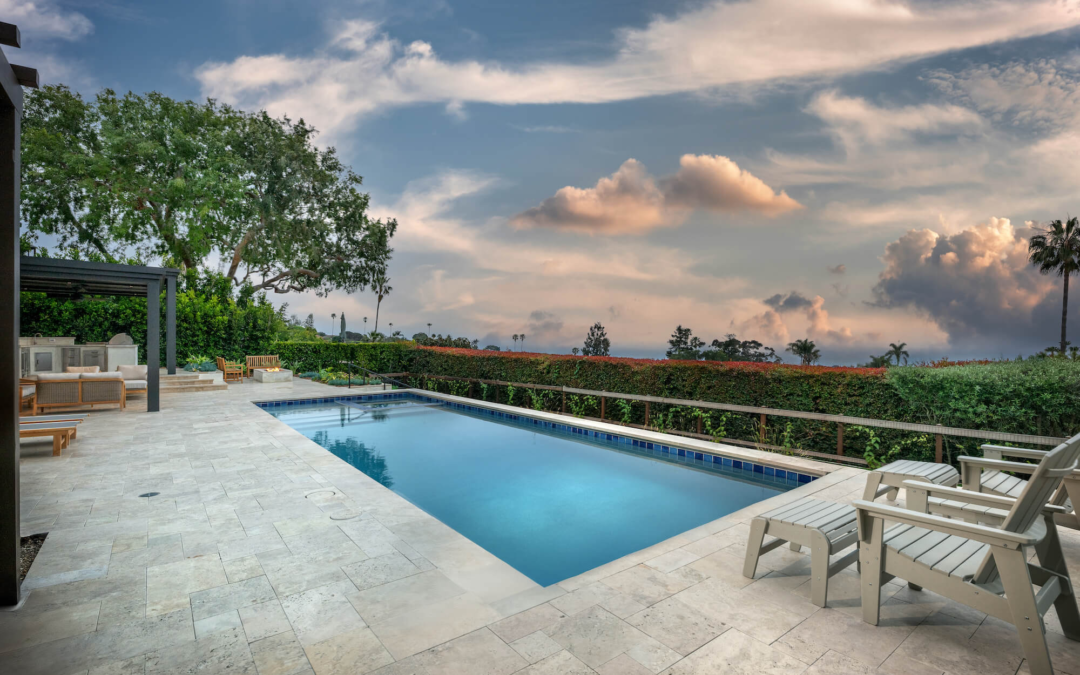
Infinity pools continue to be one of the most sought-after features for luxury homes, especially properties with elevated views. By allowing the waterline to visually disappear into the surrounding landscape, infinity-edge pools create a seamless connection between the backyard and the horizon.

For Malibu homes overlooking the Pacific Ocean or hillside residences in Pacific Palisades, this design approach transforms the view into part of the pool experience itself.


2. Seamless indoor-outdoor living spaces

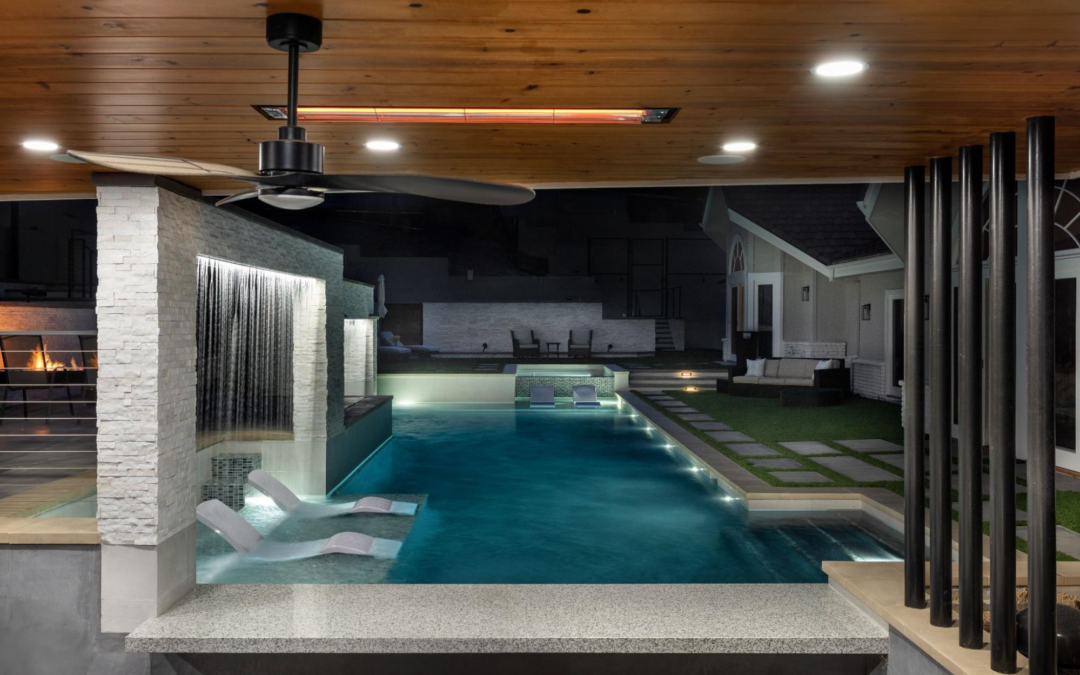
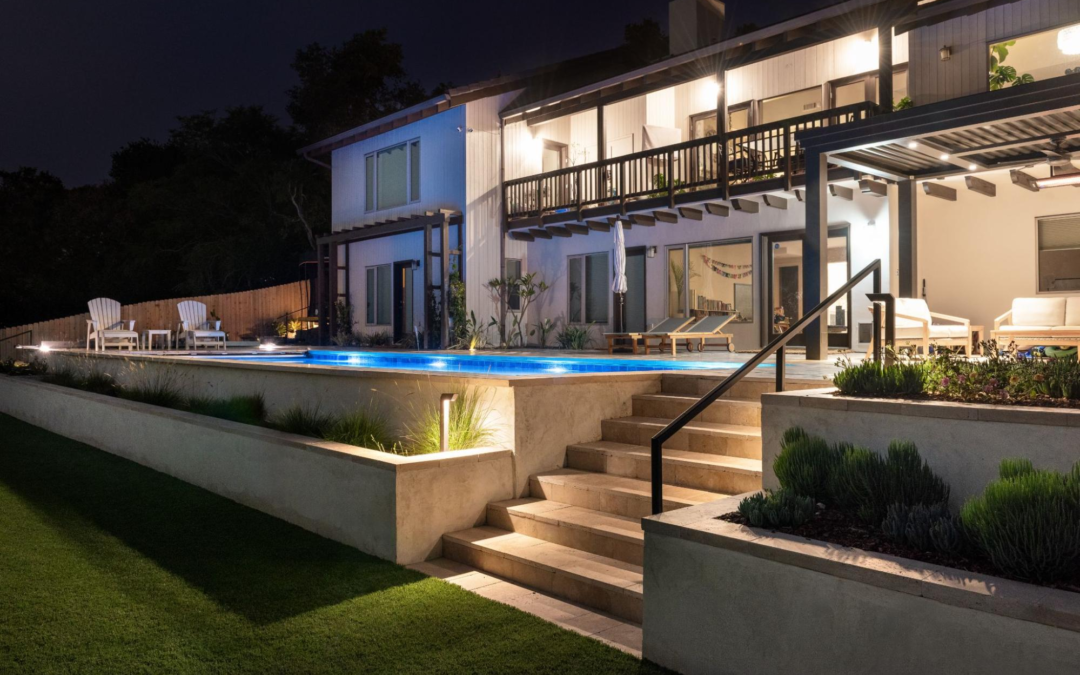
One of the strongest modern pool design trends is creating a continuous transition between interior and exterior spaces. Large glass doors, matching materials, covered outdoor rooms, and thoughtfully positioned seating areas allow homeowners to move effortlessly between the home and backyard.

The goal is not simply adding outdoor amenities but expanding the overall living experience.


3. Natural materials and refined textures

Modern luxury does not always mean minimal. Many contemporary pool designs incorporate natural materials such as stone, wood accents, porcelain, and textured finishes to create warmth and depth.

The right material palette helps the pool feel connected to the surrounding environment while adding durability and visual interest. For coastal homes, materials must also be selected with Southern California’s sun, salt exposure, and climate conditions in mind.


4. Integrated water and fire features

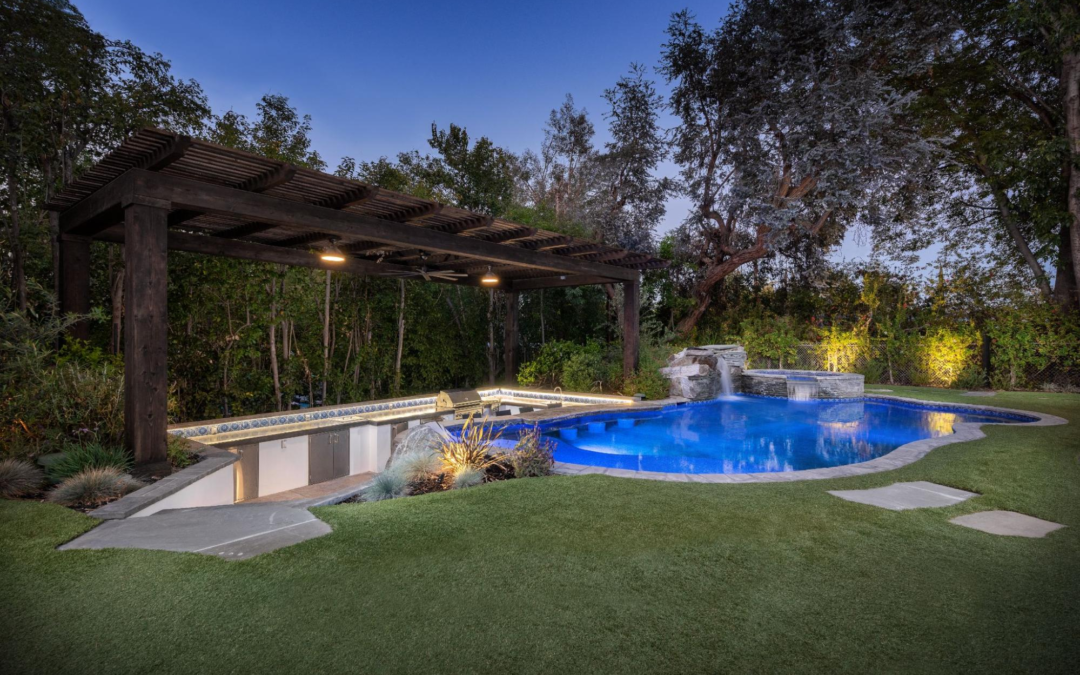
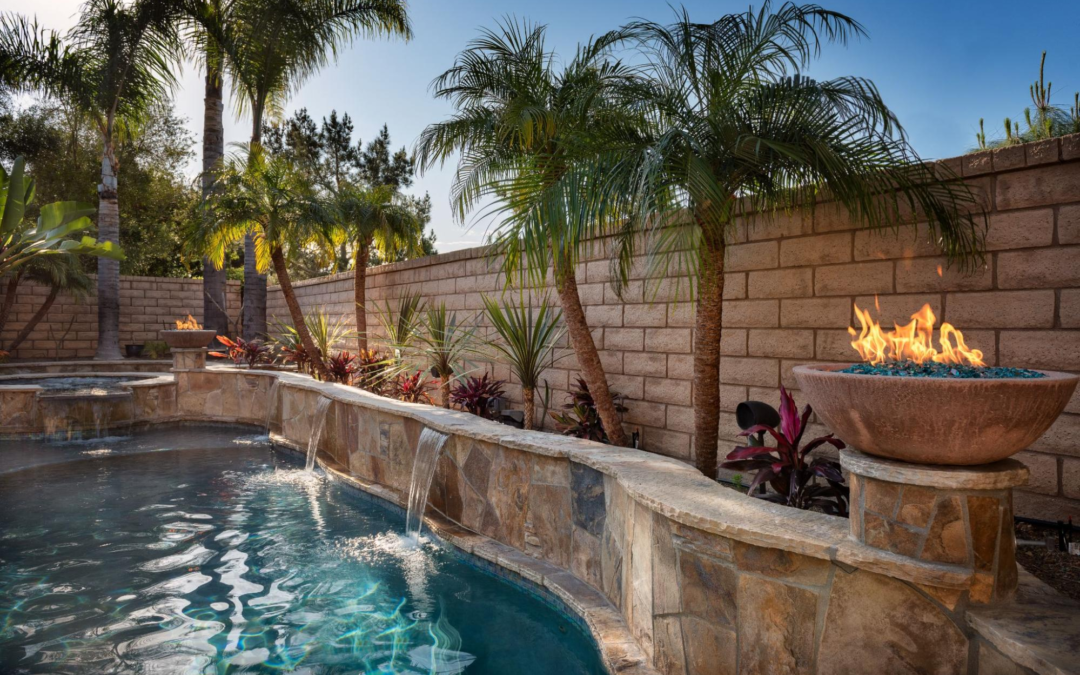
Water features, fire bowls, and architectural fireplaces add movement, atmosphere, and visual interest to modern pool environments. When carefully integrated, these elements enhance the design without overwhelming the clean aesthetic.

Fire features are especially valuable for extending the use of outdoor spaces into the evening, creating comfortable gathering areas after sunset.


5. Resort-style pool amenities

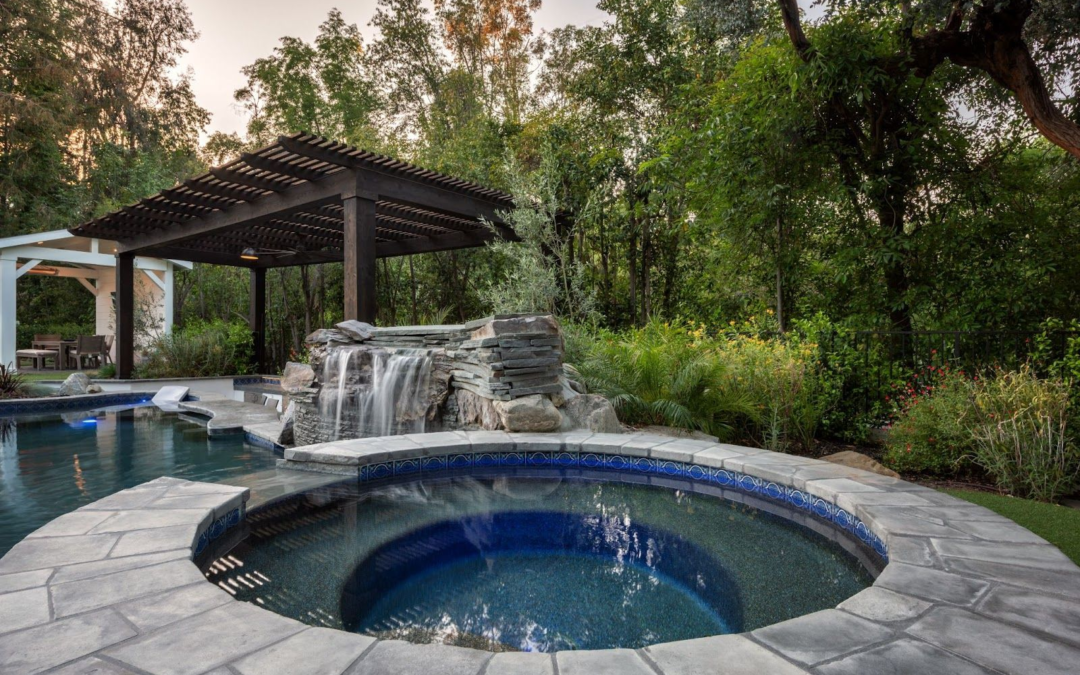
Luxury homeowners increasingly want their backyards to feel like private retreats. Modern pool design trends now include features such as Baja shelves, integrated spas, underwater seating, swim-up areas, and custom lounging spaces.

These amenities are designed around how homeowners actually use the space, creating a backyard that supports relaxation, entertaining, and everyday enjoyment.


6. Smart pool technology

Technology has become an important part of modern luxury pool design. Automated lighting, temperature control, water features, covers, and maintenance systems allow homeowners to manage their pool environment with greater convenience.

The best technology is integrated seamlessly so that it improves the experience without distracting from the overall design.


7. Sustainable and efficient design choices

Sustainability continues to influence modern pool design trends throughout California. Energy-efficient pumps, automated systems, responsible landscaping, and water-conscious features allow homeowners to create beautiful outdoor environments with improved efficiency.

Thoughtful sustainability is especially important in areas like Malibu, Pacific Palisades, and surrounding communities where homeowners value both design excellence and environmental responsibility.


Designing Pools for Malibu and Pacific Palisades Properties


Every luxury home has unique opportunities and challenges. Malibu properties often center around dramatic coastal views, challenging terrain, and the desire to maximize the relationship between architecture and ocean surroundings. Pacific Palisades homes frequently combine privacy, hillside elevations, and sophisticated residential architecture that requires careful planning.

Modern pool design trends must always be adapted to the specific property. A successful design considers the home’s proportions, natural surroundings, views, privacy needs, and how the homeowners want to experience the space.


Hillside properties require thoughtful engineering


Many luxury homes throughout Malibu and Pacific Palisades are built on sloped terrain. These properties offer incredible views but require specialized planning to address grading, structural requirements, drainage, and elevation changes.

When engineering and design work together from the beginning, challenging landscapes can become some of the most visually striking outdoor environments.


The Importance of Timeless Design Over Short-Term Trends


While modern pool design trends provide inspiration, the most valuable luxury pools are not designed around passing styles. They are created around timeless principles: proportion, craftsmanship, material quality, and connection to the surrounding environment.

A well-designed pool should continue to feel sophisticated years after completion. By focusing on architectural harmony and thoughtful details, homeowners can create outdoor spaces that remain beautiful, functional, and valuable over time.


Luxury is found in the details


The difference between an ordinary pool and an exceptional one often comes down to craftsmanship. Precise material transitions, carefully aligned edges, integrated lighting, and intentional landscaping all contribute to a finished environment that feels effortless.

These details may not always be immediately noticeable, but they are what create a sense of refinement and permanence.


Create a Modern Pool Designed Around Your Home


At Fluidity, every pool begins with a design-first approach that considers architecture, landscape, engineering, and lifestyle together. Our goal is to create outdoor environments that feel uniquely connected to each property while reflecting the highest standards of craftsmanship.

Whether you are envisioning an oceanfront infinity pool in Malibu, a hillside retreat in Pacific Palisades, or a complete luxury backyard transformation, Fluidity creates custom environments designed to elevate the way you live outdoors. Contact Fluidity to begin your custom pool design journey.

For additional information on sustainable landscape practices in California, visit the California Department of Water Resources.

Ryan Clow, Owner
Fluidity Pool Designs
805-669-1200
[email protected]

Dive Into More Design Ideas
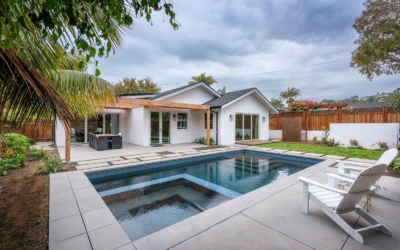
Pool Landscape Design: Creating a Seamless Luxury Outdoor Experience

Pool Landscape Design: Creating a Seamless Luxury Outdoor Experience

Pool landscape design is what transforms a backyard from a collection of separate features into a complete outdoor experience. A beautiful pool alone can create a stunning focal point, but the most memorable luxury properties are those where architecture, landscaping,...

Hillside Infinity Pools: 7 Stunning Design Ideas

Hillside Infinity Pools: 7 Stunning Design Ideas

Hillside infinity pools are among the most breathtaking outdoor features for luxury homes in Southern California. Perched above the coastline, nestled into canyon landscapes, or overlooking rolling vineyards, these homes deserve outdoor spaces that embrace their...

Resort-Style Backyard Ideas for Luxury Southern California Homes

Resort-Style Backyard Ideas for Luxury Southern California Homes

A resort-style backyard transforms outdoor living from a simple extension of the home into a private retreat designed for relaxation, entertaining, and everyday enjoyment. For luxury homeowners throughout Southern California, especially in Malibu, Pacific Palisades,...

Pool Automation Systems for Luxury Pools

Pool Automation Systems for Luxury Pools

A luxury pool should not require daily tinkering to feel exceptional. The best pool automation systems turn a complex outdoor environment into one intuitive experience, where water temperature, lighting, spa settings, fire accents, and circulation respond with precision the moment you want to entertain, unwind, or simply step outside.

For Southern California homeowners investing in a custom poolscape, automation is no longer a novelty feature. It is part of the architecture of comfort. When designed well, it supports the visual rhythm of the space, protects equipment performance, and removes the small frictions that can make even a beautiful backyard feel high-maintenance.


What pool automation systems actually control


Most people first think of app-based control, and that is certainly part of the appeal. But the real value of pool automation systems is coordination. Instead of managing separate heaters, pumps, lights, valves, sanitizers, and spa functions one by one, the system ties them together into a single operating logic.

That can include pump speed scheduling, water temperature management, spa activation, pool and landscape lighting, waterfalls, deck jets, bubblers, salt chlorination, cleaning cycles, and in some cases fire features or outdoor audio. A well-integrated system does more than turn equipment on and off. It creates scenes and routines that match how the property is actually used.

For example, an evening entertaining setting might warm the spa, illuminate the pool in a softer color palette, activate select water features, and adjust filtration timing in the background. A morning setting may prioritize circulation and cleaning while the yard is quiet. The difference is subtle but meaningful. The outdoor environment begins to feel curated rather than managed.


Why automation matters more in high-end pool design


In a standard backyard, automation can be convenient. In a bespoke outdoor living environment, it becomes foundational. Luxury pools often include multiple bodies of water, elevated spas, vanishing edges, perimeter-overflow details, feature lighting, advanced sanitization, and integrated hardscape elements. The more sophisticated the design, the more important it is that the systems behind it operate in harmony.

Without automation, complexity tends to show itself at the worst moments. A spa takes too long to heat before guests arrive. A water feature runs longer than necessary. Lighting scenes feel disconnected from the architecture. Equipment works harder than it should because schedules are not optimized.

With thoughtful automation, the technology fades into the background. That matters in a design-led project where the goal is not simply efficiency, but a composed outdoor experience. The homeowner should feel the benefit without having to think about the mechanism.


The lifestyle advantage of pool automation systems


Convenience is the most obvious benefit, but it is not the only one. For many homeowners, the deeper value is consistency. Your pool, spa, and surrounding features perform the way they should, whether you are home on a Wednesday evening or hosting a full weekend gathering.

That consistency changes how often the space gets used. A spa becomes more inviting when it can be heated before you walk outside. Pool lighting becomes part of the home’s evening ambiance when it is programmed around your routine. Water quality tends to remain steadier when pumps, sanitizers, and heaters are coordinated instead of adjusted reactively.

There is also a practical side that affluent homeowners tend to appreciate. High-end outdoor environments should feel polished, not labor-intensive. Automation reduces the need for manual intervention and can help identify performance issues earlier, especially when paired with professional monitoring and service. It does not eliminate maintenance, but it can make maintenance more intelligent.


Not all automation platforms are equal


This is where nuance matters. Many automation systems promise easy control, but the homeowner experience depends on three things: the quality of the platform, the logic of the programming, and the skill of the installation.

A strong platform should offer reliable mobile control, straightforward scheduling, expandable feature support, and compatibility with premium equipment. But hardware alone does not guarantee a refined result. If the system is poorly configured, even the best components can feel frustrating.

The right setup depends on the project. A compact plunge pool with a spa may need elegant simplicity. A larger estate property with an infinity edge, multiple pumps, dramatic lighting, and fire-water features requires a far more deliberate control strategy. There is no universal best answer. There is only the right answer for the pool, the property, and the client’s expectations.

This is one reason automation should be addressed during the design phase, not added as an afterthought. When the control system is considered early, equipment placement, conduit planning, feature integration, and user experience can be developed as one cohesive plan.


Design integration matters as much as technical integration


In luxury construction, technology should support the design language of the property. That means pool automation systems need to be considered beyond the equipment pad. The client interface matters. The responsiveness matters. Even the way scenes are named and organized matters.

A homeowner should not have to remember a maze of unlabeled functions to enjoy their backyard. Controls should feel intuitive and tailored to the home. If a poolscape includes a Baja shelf, raised spa, laminar jets, perimeter lighting, and a dining terrace with fire elements , the experience should still feel composed from a single touchpoint.

The same principle applies to visual restraint. Well-executed automation helps preserve clean lines and uncluttered outdoor spaces because fewer wall panels, remotes, and workaround controls are needed. In a property where architecture and landscape design are carefully curated, that restraint is part of the luxury.


Common decisions homeowners should make early


The first is whether you want simple remote control or fully programmed environment control. Some clients only want to adjust heat, lights, and spa settings from their phone. Others want complete scenario-based programming for entertaining, wellness routines, and energy management.

The second is how many features need to be integrated now versus prepared for later. It can be wise to build with future additions in mind, especially if there is a planned outdoor kitchen, expanded landscape lighting, or added fire elements in a later phase.

The third is who will manage the system after installation. Even the most advanced automation benefits from professional calibration, seasonal adjustments, and service support. For a high-value property, that ongoing relationship often matters just as much as the equipment itself.


Energy performance and equipment longevity


Homeowners often associate automation with luxury, but it also plays a quieter role in protecting the investment. Variable-speed pumps, heater schedules, circulation timing, and sanitization cycles can all be coordinated more efficiently through automation than by manual operation alone.

That does not mean every automated pool is automatically lower cost to operate. A larger, feature-rich pool with extensive lighting and heated water elements will still reflect its scale. But automation can help ensure the system runs with intention rather than waste. That distinction becomes significant over time.

Equipment longevity can also benefit when systems are balanced correctly. Pumps are not overworked unnecessarily. Heaters are triggered with greater precision. Water chemistry support systems can operate in more stable patterns. The outcome is not just convenience, but better stewardship of a substantial outdoor asset.


Renovations are often the right moment to upgrade


For older pools, automation can be one of the most transformative improvements available. Many legacy systems rely on outdated timers, manual valves, inconsistent lighting controls, and inefficient pump setups. The pool may still be structurally sound, yet the ownership experience feels dated.

A renovation is often the ideal time to modernize controls while also updating finishes, hydraulics, lighting, and equipment. In many cases, homeowners are surprised by how dramatically automation changes their day-to-day relationship with the space. The pool starts to feel current again, not just cosmetically refreshed.

For custom design-build firms such as Fluidity, this is where technical planning and elevated design should meet. Automation is not a side feature. It is part of how a backyard becomes a fully realized outdoor living environment.


What to expect from a well-executed system


The best result is not flashy. It is calm. You open an app or touch a control panel and the environment responds exactly as expected. The spa is ready when you want it. Lighting complements the architecture. Water features enhance the setting without creating operational headaches. Maintenance workflows become more predictable. The space feels easier to own.

That is the real promise of pool automation systems. Not more technology for its own sake, but a more effortless relationship with a space designed for beauty, leisure, and entertaining. When every element works in concert, the backyard stops feeling like a collection of features and starts feeling like a private resort shaped around the way you live.

If you are investing in a pool that is meant to elevate the entire property, automation deserves the same level of design attention as the tile, the waterline, and the view.

To learn more about integrating automation into a custom pool project, contact Fluidity Pool Designs.

Ryan Clow, Owner
Fluidity Pool Designs
(805) 669-1200
[email protected]

Dive Into More Design Ideas

Pool Landscape Design: Creating a Seamless Luxury Outdoor Experience

Pool Landscape Design: Creating a Seamless Luxury Outdoor Experience

Pool landscape design is what transforms a backyard from a collection of separate features into a complete outdoor experience. A beautiful pool alone can create a stunning focal point, but the most memorable luxury properties are those where architecture, landscaping,...

Hillside Infinity Pools: 7 Stunning Design Ideas

Hillside Infinity Pools: 7 Stunning Design Ideas

Hillside infinity pools are among the most breathtaking outdoor features for luxury homes in Southern California. Perched above the coastline, nestled into canyon landscapes, or overlooking rolling vineyards, these homes deserve outdoor spaces that embrace their...

Resort-Style Backyard Ideas for Luxury Southern California Homes

Resort-Style Backyard Ideas for Luxury Southern California Homes

A resort-style backyard transforms outdoor living from a simple extension of the home into a private retreat designed for relaxation, entertaining, and everyday enjoyment. For luxury homeowners throughout Southern California, especially in Malibu, Pacific Palisades,...

How to Design Seamless Indoor–Outdoor Living Spaces

How to Design Seamless Indoor–Outdoor Living Spaces

Creating a true outdoor living experience isn’t about adding a pool and patio—it’s about designing a space that feels like a natural extension of your home. When done right, there’s no clear line where the indoors end and the outdoors begin. Everything flows.

At Fluidity Pool Designs, this is one of the most important principles we bring into every project. Here’s how to design it the right way.


1. Start With Flow, Not Features


Most people begin with “I want a pool, a fire pit, and a kitchen.” That’s backwards.

Start with:

  • How people will move through the space
  • Where sightlines land from inside the home
  • How each area connects

A well-designed outdoor living space should feel intuitive—like it was always meant to be there.


2. Align Elevations and Transitions


One of the biggest mistakes we see is poor elevation planning.

To create seamless outdoor living:

  • Match interior floor height to exterior decking when possible
  • Use wide, gradual transitions instead of steps
  • Keep thresholds clean and minimal

The goal is to eliminate physical and visual barriers.


3. Carry Materials From Inside to Outside


Consistency in materials is key.

Examples:

  • Extend flooring tones from interior to exterior
  • Use similar stone, tile, or textures
  • Keep color palettes cohesive

This creates a unified look that visually expands your living space.


4. Design Around Views


Your outdoor space should frame what matters most.

From inside your home:

  • What do you see first?
  • Where does your eye land?

A well-placed pool, water feature, or fire element can act as a focal point that pulls the entire space together.


5. Integrate the Pool as Architecture


The pool shouldn’t feel like an add-on.

In high-end outdoor living design:

  • The pool is part of the structure
  • It aligns with the home’s geometry
  • It reinforces the overall layout

This is where most designs fall short—and where proper planning makes all the difference.


6. Think in Zones


Break the space into functional areas:

  • Dining
  • Lounge
  • Water
  • Fire
  • Circulation paths

Each zone should feel connected but distinct. The transitions between them matter just as much as the zones themselves.


7. Plan Lighting Early


Lighting is often an afterthought—but it shouldn’t be.

To elevate outdoor living:

  • Layer ambient, task, and accent lighting
  • Highlight architectural elements
  • Illuminate pathways and transitions

Good lighting extends usability and completely changes how the space feels at night.


8. Don’t Ignore Mechanical Planning


Behind every great outdoor space is a well-designed system.

This includes:

  • Equipment placement (hidden but accessible)
  • Proper drainage
  • Efficient hydraulics
  • Noise control

These details aren’t visible—but they determine how the space performs long term.


Final Thoughts


True outdoor living isn’t about adding more—it’s about designing smarter.

When everything flows—from the interior to the exterior, from one zone to the next—you don’t just get a backyard. You get a complete living environment.

At Fluidity Pool Designs, we focus on creating spaces that feel intentional, functional, and built to last.

Ryan Clow, Owner
Fluidity Pool Designs
(805) 669-1200
[email protected]

Dive Into More Design Ideas

Pool Landscape Design: Creating a Seamless Luxury Outdoor Experience

Pool Landscape Design: Creating a Seamless Luxury Outdoor Experience

Pool landscape design is what transforms a backyard from a collection of separate features into a complete outdoor experience. A beautiful pool alone can create a stunning focal point, but the most memorable luxury properties are those where architecture, landscaping,...

Hillside Infinity Pools: 7 Stunning Design Ideas

Hillside Infinity Pools: 7 Stunning Design Ideas

Hillside infinity pools are among the most breathtaking outdoor features for luxury homes in Southern California. Perched above the coastline, nestled into canyon landscapes, or overlooking rolling vineyards, these homes deserve outdoor spaces that embrace their...

Resort-Style Backyard Ideas for Luxury Southern California Homes

Resort-Style Backyard Ideas for Luxury Southern California Homes

A resort-style backyard transforms outdoor living from a simple extension of the home into a private retreat designed for relaxation, entertaining, and everyday enjoyment. For luxury homeowners throughout Southern California, especially in Malibu, Pacific Palisades,...

Choosing the Best Pool Finishes for Modern Homes

Choosing the Best Pool Finishes for Modern Homes

A pool finish is not simply the surface beneath the water. It determines whether a backyard reads as crisp and architectural, softly coastal, or richly resort-inspired from the first glimpse through the glass. For homeowners weighing the best pool finishes for modern homes, the decision deserves the same care as the home’s stone, cabinetry, and lighting. Water magnifies color, reflects the sky, and draws attention to every material choice around it.

In Malibu, Pacific Palisades, Hidden Hills, and Montecito, that effect is especially pronounced. Intense sun, changing coastal light, drought-conscious landscape palettes, and indoor-outdoor architecture all influence the way a finish performs visually. The right selection creates a composed relationship between pool, spa, coping, hardscape, and horizon. The wrong one can make an otherwise exceptional design feel disconnected or dated.


What Makes a Pool Finish Feel Modern?


Modern pool design is often described as minimal, but restraint is only part of the equation. A contemporary pool finish should have visual depth without appearing busy, hold its color beautifully across changing conditions, and support the architecture rather than compete with it. In a sharply linear pool, for example, a refined deep-gray finish can reinforce clean geometry. In a softer, landscape-led setting, a pale aggregate may create the quiet, luminous water associated with a private coastal retreat.

The water color seen from the terrace is never just the finish color. It is shaped by depth, sun angle, tile, interior shade, surrounding walls, nearby planting, and the sky. A sample viewed dry in a showroom can appear dramatically different once installed across a large vessel and filled with water. That is why material selection should happen alongside the broader design, not as a final construction decision.

A finish must also meet the realities of use. A showpiece pool with an uncomfortable floor, overly reflective surface, or demanding maintenance profile may not suit a family that swims daily and entertains often. The most sophisticated choice is one that balances appearance, tactile comfort, longevity, and the way the property will actually be lived in.


Best Pool Finishes for Modern Homes


Porcelain and Ceramic Tile

For a highly tailored, architectural result, full-tile interiors remain among the most luxurious options. Large-format porcelain tiles can create a calm, monolithic appearance, particularly in charcoal, soft white, muted sand, and blue-gray palettes. Smaller ceramic mosaics offer more movement and can give a spa or perimeter-overflow pool a jewel-like quality without overwhelming the space.

Tile is especially compelling for pools with precise lines, raised spas, sun shelves, vanishing-edge pools, and detailed water features. It offers exceptional color consistency and can be easier to clean than more textured finishes. It also commands a higher investment, and installation quality is nonnegotiable. Alignment, substrate preparation, grout selection, expansion details, and finish transitions all need expert coordination for the result to look truly refined.

For many modern residences, porcelain is the more understated choice, while glass mosaic is best reserved for focal areas. A fully glass-tiled pool can be extraordinary, but it should be chosen with intention. In strong California sunlight, highly reflective finishes may create more sparkle than a quiet, contemporary composition requires.


Premium Pebble and Exposed Aggregate

Premium pebble finishes are a leading choice for homeowners who want depth, durability, and a nature-inspired look. Small polished stones are exposed at the surface, producing nuanced water color and a finish that complements organic modern architecture, limestone decks, warm wood details, and layered planting.

The finish can range from pale and luminous to dark and dramatic. Soft ivory and light-gray aggregates tend to produce clear blue or aqua water, while charcoal blends create a more reflective, inky tone. A medium gray often offers the most adaptable result, giving water a clean blue-gray presence while concealing minor debris better than very pale interiors.

Texture is the central trade-off. A quality pebble surface is durable, but it generally feels more textured underfoot than plaster or tile. Polished pebble and smaller aggregate blends can soften that sensation substantially. For pools intended for frequent barefoot use, the specific material sample matters as much as the color name.


Polished Aggregate and Mini Pebble

Polished aggregate and mini pebble finishes occupy a particularly appealing middle ground. They offer more depth and resilience than traditional plaster while presenting a smoother, more tailored surface than larger exposed pebble. Their fine scale suits contemporary projects where the pool needs to feel elevated but not overly decorative.

This category works beautifully with pale stone patios, board-formed concrete, white stucco, and modern Mediterranean architecture. It can also create sophisticated dark-water effects without the high reflectivity of glass tile. Because the aggregate is finer, visual variation appears controlled and elegant from a distance.

For a residence where the pool is central to daily outdoor living, mini pebble often earns its place as the practical luxury choice. It has enough character to prevent the water from looking flat, yet its texture and maintenance profile remain well suited to an active household.


Quartz Plaster

Quartz plaster is a refined upgrade from standard plaster, blending cement with quartz aggregate for added strength and subtle sparkle. It is available in a broad range of colors and can achieve clean, even water tones that suit streamlined pool forms. Light quartz interiors are especially effective for homeowners seeking bright, inviting water without the visual movement of a pebble surface.

Its appeal lies in its polished simplicity. In the right palette, quartz can make a geometric pool feel fresh, tailored, and quietly luxurious. It is generally smoother underfoot than exposed aggregate, which is valuable for shallow lounging areas and play-friendly pool floors.

The consideration is longevity. Like other cementitious finishes, quartz requires attentive water chemistry and thoughtful maintenance to preserve its appearance. It may not offer the same long-term forgiveness as tile or premium pebble, particularly in a heavily used pool. Still, when paired with disciplined care and a considered design, it can deliver a beautiful modern result.


Classic Plaster

Traditional plaster has a place in select designs, particularly when the desired look is clean, simple, and cost-conscious relative to more elaborate materials. White plaster delivers the familiar, bright-blue pool color many homeowners associate with Southern California living. Colored plaster can create a more tailored effect, from soft gray-blue to deep cobalt.

For a high-end modern home, however, standard plaster is usually best approached as a deliberate aesthetic decision rather than the default. Its uniform appearance can be appealing in a restrained setting, but it offers less depth and typically a shorter service life than upgraded aggregate finishes. Variations and mottling can also be more visible, particularly in darker colors.


Selecting Water Color Before Selecting Material


Many finish decisions begin with a request for blue water. The better question is: what kind of blue, in what light, from which viewpoint? Pale interiors produce brighter, more transparent water. Mid-tone grays often yield a sophisticated blue-gray. Dark interiors create reflective, dramatic water that can visually extend the surrounding architecture and landscape.

A dark finish is especially effective for vanishing-edge pools overlooking a canyon, cityscape, or distant ocean, where the water is intended to merge with the view. Yet dark interiors can absorb more heat and reveal mineral deposits or surface debris differently than lighter finishes. A pale finish feels more buoyant and expansive, though it may show leaves, dust, and imperfections more readily.

The spa deserves its own consideration. A finish that feels tranquil in a large pool can appear much darker in a smaller spa, where water depth is limited. Coordinating the materials is usually wise, but identical color is not always necessary. A restrained tile accent can distinguish the spa while preserving the larger composition.


Details That Protect the Design Intent


The most successful pool interiors are not chosen in isolation. Waterline tile, coping, deck material, grout tone, interior lighting, and even the color of the pool drain covers influence the finished scene. A richly veined stone coping paired with a highly variegated pool finish may introduce too much competing movement. Conversely, a quiet concrete terrace can give a nuanced pebble interior room to feel intentional.

Lighting changes the equation after sunset. Warm landscape lighting around a dark pool creates a reflective, cinematic surface, while cool-toned interior LEDs can make the same finish read more electric. Selecting lighting temperature and fixture placement early helps avoid a nighttime experience that contradicts the daytime design.

Material quality and construction precision are equally essential. Proper surface preparation, carefully managed water chemistry during startup, accurate tile setting, and consistent attention during installation protect both performance and visual integrity. At Fluidity, finish selections are considered within the complete outdoor environment, supported by detailed visualization and hands-on execution rather than treated as an isolated product choice.

Before committing to a finish, view sizable samples outdoors beside the proposed coping and hardscape, ideally at more than one time of day. Then consider how the water should feel from inside the home, from the primary entertaining terrace, and from the pool itself. The right finish is the one that continues to look composed long after the first reveal, making the water feel inseparable from the architecture around it.


Ryan Clow, Owner
Fluidity Pool Designs
805-669-1200
[email protected]

Dive Into More Design Ideas

Pool Landscape Design: Creating a Seamless Luxury Outdoor Experience

Pool Landscape Design: Creating a Seamless Luxury Outdoor Experience

Pool landscape design is what transforms a backyard from a collection of separate features into a complete outdoor experience. A beautiful pool alone can create a stunning focal point, but the most memorable luxury properties are those where architecture, landscaping,...

Hillside Infinity Pools: 7 Stunning Design Ideas

Hillside Infinity Pools: 7 Stunning Design Ideas

Hillside infinity pools are among the most breathtaking outdoor features for luxury homes in Southern California. Perched above the coastline, nestled into canyon landscapes, or overlooking rolling vineyards, these homes deserve outdoor spaces that embrace their...

Resort-Style Backyard Ideas for Luxury Southern California Homes

Resort-Style Backyard Ideas for Luxury Southern California Homes

A resort-style backyard transforms outdoor living from a simple extension of the home into a private retreat designed for relaxation, entertaining, and everyday enjoyment. For luxury homeowners throughout Southern California, especially in Malibu, Pacific Palisades,...

Luxury Pool Design and Construction

Luxury Pool Design and Construction

A luxury pool should never feel like an accessory dropped into a backyard. It should feel inevitable – as if the water, hardscape, lighting, and architecture were always meant to belong together. That is the difference between standard installation and luxury pool design and construction: one adds a feature, the other shapes an entire outdoor experience.

For high-end homes in Southern California, that distinction matters. A pool is often the visual anchor of the property, the setting for family life, entertaining, quiet evenings, and the way the home is perceived as a whole. When the design is thoughtful, the result is more than beautiful. It is personal, highly functional, and enduring.


What luxury pool design and construction really means


At the luxury level, pool building is not about selecting a shape and choosing tile from a short list. It begins with the property itself – the architecture of the residence, the natural grade of the land, sightlines from key interior rooms, sun exposure, privacy, circulation, and how the space is meant to be lived in.

That is why luxury pool design and construction requires both artistic judgment and technical discipline. The design must be emotionally compelling, but it also has to resolve engineering realities, permitting requirements, hydraulic performance, equipment placement, structural integrity, and long-term maintenance. If any one of those elements is treated as secondary, the finished project may look impressive at first and disappoint later.

The strongest projects are composed, not assembled. The pool, spa, lounge areas, fire features, outdoor kitchen, decking, and landscape should read as one environment. Nothing should feel tacked on. Every transition should feel intentional.


Design first, then construction


Many costly mistakes happen when construction starts before the design has been fully developed. In premium residential settings, that approach almost always creates compromise. A vanishing edge may be placed without fully considering where it is best viewed from. A spa may interrupt the most elegant circulation path. Equipment may be functional but poorly concealed. Lighting may be added at the end instead of integrated from the start.

A design-forward process prevents that. Detailed planning allows homeowners to evaluate scale, proportion, materials, and feature placement before construction begins. For discerning clients, 3D visualization is especially valuable because it removes guesswork. Seeing the yard replicated virtually makes it easier to assess whether the pool feels too assertive, too understated, or exactly right for the home.

This is also where collaboration matters. The best outcomes come from a process that listens closely to how a client lives. A family that entertains large groups will have different priorities than a homeowner seeking privacy, wellness, and a resort-like retreat. Both may want luxury, but luxury is not a single aesthetic. It is a custom response.


The features that define a high-end poolscape


A luxury pool is rarely defined by size alone. In fact, oversized pools can sometimes dilute the sophistication of a space if they overpower the lot or leave little room for complementary uses. What matters more is how the water feature supports the complete environment.

Infinity edges remain one of the most striking expressions of elevated design, particularly on properties with canyon, ocean, or hillside views. When executed well, they create visual calm and strengthen the connection between home and landscape. But they are not right for every site. They involve more structural complexity, precise engineering, and careful hydraulic planning. On a flat lot without a meaningful visual drop, another design move may create a stronger result.

Integrated spas, baja shelves, swim-up seating, submerged loungers, and fire-water combinations can all add richness to the experience, but they should be chosen with restraint. The most refined projects avoid feature overload. Luxury is often felt in the edit as much as in the addition.

Material selection plays an equally important role. Interior finishes, coping, waterline tile, decking, and adjacent hardscape should align with the architecture and the level of formality the property calls for. A sleek contemporary residence may benefit from crisp lines, understated stone, and controlled contrast. A Mediterranean or transitional estate may call for warmer textures and a softer visual rhythm. The point is not trend chasing. It is cohesion.


Why engineering and supervision matter as much as aesthetics


Beautiful renderings are not enough. Behind every exceptional pool is disciplined execution. Soil conditions, slope, drainage, structural demands, and equipment performance all shape whether a design succeeds in the real world.

This is especially true in Southern California, where hillside lots, view properties, and complex municipal requirements can add significant layers to a project. Permitting, grading considerations, retaining conditions, and utility coordination should not be treated as background tasks. They influence schedule, budget, and what is realistically achievable.

Daily hands-on supervision becomes critical at this level. Premium clients are not simply paying for labor and materials. They are paying for oversight, precision, communication, and accountability. Tile alignment, elevation tolerances, finish consistency, drainage execution, and equipment integration all depend on close management. Small misses become visible quickly in luxury environments because every detail is under a brighter spotlight.

When craftsmanship is uncompromising, the space feels effortless. When it is not, even expensive materials cannot disguise the problem.


Technology should enhance the experience, not complicate it


One hallmark of modern luxury pool design and construction is the quiet integration of technology. Advanced automation can control lighting, water features, heating, spa settings, and cleaning systems with remarkable convenience. For many homeowners, that ease is part of the appeal. The outdoor environment should feel intuitive to use, not demanding to manage.

At the same time, more technology is not always better. Systems should be selected for reliability, compatibility, and how the client actually intends to use the space. A fully connected environment can be a benefit, but only if it works consistently and is easy to understand.

Nature-inspired technology also has a place in thoughtful pool design. Movement, sound, reflection, and lighting can be orchestrated to make the water feel more natural and immersive. The most memorable spaces often balance clean engineering with sensory softness.


Renovation can be as transformative as new construction


Not every luxury project begins with an empty yard. Many begin with a pool that is structurally dated, visually disconnected from the home, or no longer suited to the way the property is used. In those cases, renovation may offer a remarkable opportunity.

A well-conceived remodel can rework the pool geometry, modernize surfaces and coping, improve hydraulics and equipment, introduce automation, and add integrated outdoor living features that were absent from the original build. It can also correct earlier design decisions that limited entertaining flow, diminished views, or left the yard feeling fragmented.

The same standard applies, however: renovation should be approached as a design exercise, not a cosmetic patch. Simply replacing finishes without rethinking the larger composition often leaves value on the table.


Choosing the right partner for a bespoke project


For affluent homeowners, the choice of builder is inseparable from the quality of the outcome. Luxury projects demand more than technical capability. They require design literacy, discretion, communication, and the ability to translate a client’s taste into built form.

A strong partner will ask better questions before offering solutions. They will talk about how the yard should function at noon, at sunset, during a large gathering, and on an ordinary Tuesday evening. They will explain trade-offs clearly. They will be candid about what improves the project and what merely increases cost.

This is where a company like Fluidity stands apart. When design, visualization, engineering, and construction are treated as one curated process, the result is more coherent and more personal. The experience becomes white-glove, but it also becomes more exacting in the best sense.

A truly exceptional pool does not compete with the home for attention. It completes it. The waterline, the stone underfoot, the glow after dark, the way guests move through the space, the way mornings feel quieter beside it – those are the details that turn a backyard into a lasting sanctuary of sophistication. If the project is approached with imagination and rigor in equal measure, the finished environment will not just look luxurious. It will live beautifully for years to come.

Dive Into More Design Ideas

Pool Landscape Design: Creating a Seamless Luxury Outdoor Experience

Pool Landscape Design: Creating a Seamless Luxury Outdoor Experience

Pool landscape design is what transforms a backyard from a collection of separate features into a complete outdoor experience. A beautiful pool alone can create a stunning focal point, but the most memorable luxury properties are those where architecture, landscaping,...

Hillside Infinity Pools: 7 Stunning Design Ideas

Hillside Infinity Pools: 7 Stunning Design Ideas

Hillside infinity pools are among the most breathtaking outdoor features for luxury homes in Southern California. Perched above the coastline, nestled into canyon landscapes, or overlooking rolling vineyards, these homes deserve outdoor spaces that embrace their...

Resort-Style Backyard Ideas for Luxury Southern California Homes

Resort-Style Backyard Ideas for Luxury Southern California Homes

A resort-style backyard transforms outdoor living from a simple extension of the home into a private retreat designed for relaxation, entertaining, and everyday enjoyment. For luxury homeowners throughout Southern California, especially in Malibu, Pacific Palisades,...

Luxury Backyard Design Trends for Elevated Living

Luxury Backyard Design Trends for Elevated Living

A remarkable backyard no longer begins and ends with a pool. The most compelling luxury backyard design trends treat the entire property as a composed experience: a place for quiet morning swims, long lunches beneath filtered shade, sunset gatherings around a fire feature, and evenings that continue effortlessly after the sun goes down. For Southern California homeowners, the goal is not to fill a yard with amenities. It is to create an outdoor environment with a point of view.

The strongest designs feel inevitable, as though the architecture, landscape, water, and views were always meant to belong together. Achieving that effect calls for more than premium materials. It requires thoughtful planning, disciplined detailing, and a clear understanding of how a family will actually live outdoors.


Luxury Backyard Design Trends That Feel Personal


The defining trend in high-end exterior design is personalization. Rather than selecting features from a standard menu, discerning homeowners are asking for spaces that reflect the character of their home, their routines, and the way they entertain.

A coastal Malibu property may call for a restrained infinity-edge pool that directs the eye toward the ocean. A Calabasas estate may benefit from layered terraces, a generous spa, and intimate lounge zones that make a large property feel warm and connected. In the hills of Westlake Village or Thousand Oaks, preserving sightlines and responding gracefully to changing elevations may become the central design challenge.

This is why a custom design process matters. Before construction begins, a detailed 3D visualization can reveal how pool elevations, fire features, outdoor kitchens, material transitions, and furniture zones will read together. It gives homeowners the opportunity to refine the composition before decisions become permanent, while allowing the design and engineering teams to solve complex site conditions early.


Sculptural Water as the Centerpiece


Pools are becoming more architectural and expressive. Clean geometric forms remain popular, particularly with contemporary homes, but they are often softened with oversized tanning ledges, integrated spas, floating stepping pads, or carefully placed planters. The result is less like a conventional recreational pool and more like a reflecting element within the landscape.

Vanishing edges continue to be sought after on view properties, though they are not the right choice for every yard. They require appropriate grades, structural planning, and a design that supports the visual drama of the feature. On flatter sites, perimeter-overflow detailing, raised waterlines, or a finely proportioned negative edge can create a similarly elevated effect without forcing a solution that does not suit the property.

Dark interior finishes are also shaping luxury pool design. Charcoal, deep blue, and slate-toned surfaces can give water a more reflective, natural appearance, especially when paired with stone, warm wood tones, and restrained planting. Lighter finishes remain an excellent choice for homes seeking a bright, resort-inspired look. The right finish depends on the architecture, sunlight exposure, desired water color, and maintenance expectations.


Outdoor Rooms With a Clear Purpose


A luxurious backyard is increasingly organized as a collection of outdoor rooms. Each space has a reason to exist, yet the transitions between them feel natural. The pool deck might lead to a shaded dining pavilion, then to a fire lounge designed for conversation, while a quieter corner offers a private spa retreat or reading area.

This approach brings a greater sense of comfort to large yards and makes compact yards work harder. A well-designed seating area does not need to be oversized to feel generous. It needs proper scale, a compelling focal point, and enough separation from circulation paths to encourage guests to settle in.

Outdoor kitchens are also becoming more refined. The expectation has moved beyond a grill set into stone veneer. Today’s best installations are designed as true culinary spaces, with integrated refrigeration, storage, durable counters, task lighting, and a layout that keeps the host connected to guests. For frequent entertainers, a pizza oven, bar seating, or discreet service station can transform the experience. For homeowners who prefer simpler gatherings, a beautifully detailed grill island and dining area may be the more elegant choice.

Shade is essential to this conversation. Retractable canopies, architectural pergolas, and covered pavilions extend the usefulness of the yard during bright afternoons and warmer months. The key is to avoid creating a heavy structure that obstructs views or darkens interior rooms. Material selection, roofline height, and orientation should be considered alongside the home’s architecture from the beginning.


Fire Features With Architectural Restraint


Fire remains one of the most effective ways to create atmosphere after dark. Linear fire troughs, sculptural fire bowls, and sunken conversation areas offer visual warmth and invite people to linger. The most successful installations are not simply added as decoration. They establish a focal point and help define how an outdoor room is used.

A fire feature near a pool can create a compelling contrast between water and flame, but scale is critical. Too many competing focal points can make a backyard feel staged rather than composed. In a minimal contemporary setting, one long linear feature may be enough. In a more expansive landscape, a fireplace or fire lounge can anchor a separate entertaining zone.

Fuel choice, safety clearances, wind exposure, and local permitting all deserve careful consideration. Luxury is as much about confidence and reliability as it is about visual impact. A feature should perform beautifully every time it is used.


Materials That Age With Grace


Among the most enduring luxury backyard design trends is a move toward materials with depth, texture, and longevity. Natural stone, porcelain, architectural concrete, hardwood accents, and hand-finished plaster all have a place when selected in harmony with the home and climate.

In Southern California, heat, salt air, intense UV exposure, and irrigation demand practical choices. A pale natural stone may look exceptional but can require more ongoing care than a premium porcelain surface with a similar visual character. Wood introduces warmth, but it must be specified with realistic expectations around maintenance and sun exposure. There is no universal best material. There is only the material that supports the design vision and the owner’s tolerance for upkeep.

Consistency matters as well. Repeating a stone from the pool coping at a low garden wall or outdoor kitchen helps the landscape feel intentional. A restrained palette often feels more luxurious than an assortment of expensive finishes competing for attention.


Lighting and Automation That Serve the Experience


The most sophisticated lighting is felt before it is noticed. It guides guests safely across terraces, gives planting a sculptural presence, reveals texture in stonework, and makes water feel alive at night. Layered lighting is far more effective than relying on bright fixtures alone.

Pool lighting should be coordinated with landscape and architectural lighting, not designed in isolation. Warm white light generally creates a more timeless atmosphere around dining and lounging areas, while color-changing pool lights can be reserved for celebratory moments rather than becoming the default setting.

Automation is equally valuable when it simplifies ownership. Intelligent controls can coordinate pool temperature, spa settings, lighting, water features, and equipment schedules from a single interface. This is especially appealing for second homes and busy households. Still, technology should support the environment rather than complicate it. A system with intuitive controls and dependable service is more valuable than one overloaded with functions no one uses.


Landscape Design as a Living Frame


The final layer is planting. Mature olive trees, sculptural palms, ornamental grasses, fragrant herbs, and native or climate-appropriate plantings can give a new project immediate character while respecting Southern California’s water realities. Landscape should frame views, soften hardscape, create privacy where needed, and introduce seasonal change.

A lush appearance does not have to mean excessive water use. Thoughtful irrigation, hydrozoning, shade planning, and climate-responsive species can create a generous garden with a more responsible long-term footprint. The most elegant landscapes balance visual abundance with restraint.

At Fluidity, this integrated perspective is central to creating outdoor living environments that feel bespoke rather than assembled. When water, architecture, hardscape, landscape, and technology are considered as one composition, a backyard becomes more than an impressive amenity. It becomes the setting for the life you want to spend at home.


Ryan Clow, Owner
Fluidity Pool Designs
805-669-1200
[email protected]

Dive Into More Design Ideas

Pool Landscape Design: Creating a Seamless Luxury Outdoor Experience

Pool Landscape Design: Creating a Seamless Luxury Outdoor Experience

Pool landscape design is what transforms a backyard from a collection of separate features into a complete outdoor experience. A beautiful pool alone can create a stunning focal point, but the most memorable luxury properties are those where architecture, landscaping,...

Hillside Infinity Pools: 7 Stunning Design Ideas

Hillside Infinity Pools: 7 Stunning Design Ideas

Hillside infinity pools are among the most breathtaking outdoor features for luxury homes in Southern California. Perched above the coastline, nestled into canyon landscapes, or overlooking rolling vineyards, these homes deserve outdoor spaces that embrace their...

Resort-Style Backyard Ideas for Luxury Southern California Homes

Resort-Style Backyard Ideas for Luxury Southern California Homes

A resort-style backyard transforms outdoor living from a simple extension of the home into a private retreat designed for relaxation, entertaining, and everyday enjoyment. For luxury homeowners throughout Southern California, especially in Malibu, Pacific Palisades,...