
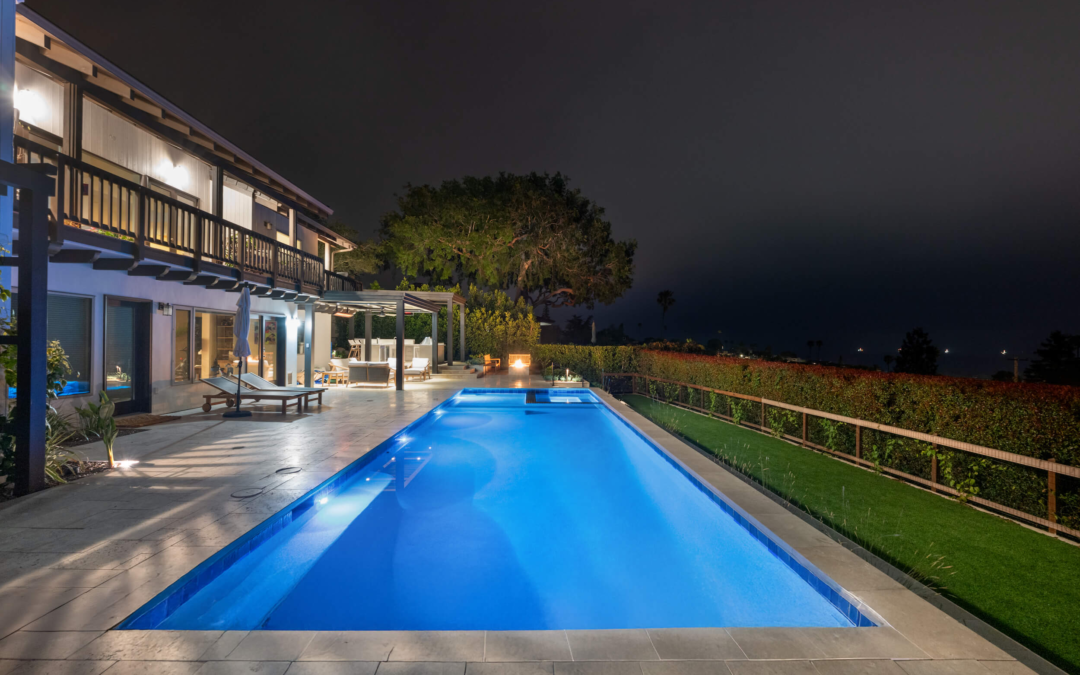
Your pool doesn’t disappear when the sun goes down.
In fact, the right pool lighting can completely transform how your backyard looks and feels at night. Thoughtfully placed lights can highlight architectural details, improve safety, create a relaxing atmosphere, and make your outdoor space more enjoyable long after sunset.
But choosing pool lighting is about more than simply deciding where to add a few fixtures. The right design considers the pool itself, surrounding landscaping, outdoor living areas, architecture, and how you plan to use the space.
Here are 7 important considerations for choosing the right pool lighting for your backyard.
1. Start With How You Use Your Pool
Before selecting pool lighting, think about how your backyard is actually used at night.
- Do you swim after dark?
- Do you entertain guests outdoors?
- Do you use the pool primarily for relaxing?
- Do you want the backyard to feel dramatic or understated?
Your answers should influence the entire lighting plan.
A pool used for evening swimming may need more functional illumination, while a pool primarily used for entertaining may benefit from softer, layered lighting throughout the surrounding environment.
The best pool lighting supports the experience you want to create rather than simply adding brightness.
2. Consider the Pool’s Shape and Size
Every pool has different lighting needs.
A long, narrow pool may require a different approach than a compact geometric pool, while curves, steps, tanning ledges, and architectural features can all affect fixture placement.
When planning pool lighting, consider:
- The overall length and width of the pool
- Changes in depth
- Steps and entry points
- Water features
- Spas and tanning ledges
Strategic placement helps create even illumination without making the pool feel overly bright. It also prevents dark areas from disrupting the visual flow of the design.
3. Choose the Right Color Temperature
Color temperature has a major effect on the mood of your backyard.
Warm lighting can create a softer, more inviting atmosphere, while cooler light can produce a cleaner and more contemporary appearance. The right choice often depends on the architecture, materials, landscaping, and overall design of the property.
For many luxury outdoor environments, subtle pool lighting works best when it complements the surrounding finishes rather than competing with them.
Think about the color of your pool finish, coping, decking, stone, and landscaping as part of the decision. The water itself can also change in appearance depending on the finish and the type of light used.
4. Layer Your Pool Lighting
One of the biggest mistakes in outdoor lighting is trying to illuminate everything with the same type of fixture.
Effective pool lighting is layered.
- Underwater lights illuminate the pool itself
- Path lighting helps guide movement around the backyard
- Accent lighting highlights landscaping and architectural details
- Ambient lighting creates a comfortable atmosphere around outdoor living areas
Layering creates depth and keeps the backyard from feeling flat. Instead of seeing a collection of individual fixtures, you experience the entire environment as one cohesive space.
For a luxury pool, this distinction matters. The goal is not to make the backyard as bright as possible. The goal is to make every area feel intentional.
5. Highlight Architectural and Landscape Features
Your pool is only one part of the backyard.
The surrounding environment can become just as important after dark, especially when your property includes:
- Waterfalls or sheer descents
- Retaining walls
- Specimen trees
- Outdoor kitchens
- Fire features
- Covered patios
Pool lighting can be coordinated with these elements to create a stronger visual connection throughout the property.
Rather than lighting every feature equally, focus on the elements you want to draw attention to. A carefully illuminated tree or architectural wall can add depth without overwhelming the pool itself.
6. Prioritize Safety Without Sacrificing Design
Pool lighting should always serve a practical purpose as well as an aesthetic one.
Steps, entry points, pathways, and changes in elevation should be easy to see at night. Good lighting can help people move through the space confidently while reducing unnecessary glare.
Safety should be considered throughout the entire backyard, not just inside the pool.
Professional planning also matters when it comes to fixture placement, electrical systems, and equipment. A qualified pool professional can help ensure your lighting plan is appropriate for the environment and works properly with the rest of your pool system.
7. Think About Energy Efficiency and Control
Modern pool lighting can provide a dramatic nighttime experience without requiring excessive energy.
Energy-efficient LED fixtures are a popular choice because they can provide strong illumination while using less energy than traditional lighting technologies. They can also offer flexibility when it comes to brightness, color, and control.
Consider how you want to control your pool lighting, too.
- Automated schedules
- Smart controls
- Adjustable brightness
- Color-changing options
These features can make it easier to create different settings for swimming, entertaining, relaxing, or simply enjoying the backyard from inside the home.
Why Professional Pool Lighting Design Matters
Choosing fixtures is only one part of creating effective pool lighting.
Placement, spacing, beam direction, brightness, color temperature, and the relationship between the pool and surrounding spaces all influence the final result.
A professional design approach considers these details together from the beginning. This can help prevent common problems such as excessive glare, uneven illumination, visible fixtures, or lighting that feels disconnected from the architecture.
When pool lighting is integrated into the overall design, it becomes part of the experience rather than something added at the end of construction.
Final Thoughts
The right pool lighting can turn an ordinary backyard into a destination that feels just as inviting at night as it does during the day.
The best approach balances beauty, function, safety, and efficiency. Start with how you use the space, consider the architecture and landscape, layer different types of lighting, and choose fixtures that complement the overall design.
When every element works together, pool lighting does more than illuminate the water. It creates atmosphere, highlights the details you love, and extends the experience of your backyard well beyond sunset.
At Fluidity Pool Designs, we consider pool lighting as part of the larger design from the beginning, creating outdoor environments that feel intentional, elevated, and enjoyable day and night.
Ryan Clow, Owner
Fluidity Pool Designs
805-669-1200
[email protected]
Dive Into More Design Ideas
How Long Does It Take to Build a Pool? A Complete Timeline
How long does it take to build a pool? It is one of the first questions homeowners ask when they begin planning a new pool. Understanding the pool construction timeline can help you know what to expect from the initial consultation through the final walkthrough. A...
9 Pool Features That Can Transform Your Backyard
The right pool features can transform a backyard from a place to swim into a complete outdoor environment. The best features are not simply added for appearance. They can improve how you use the pool, create a stronger connection between the pool and surrounding...
Pool Design for Pacific Palisades Homes: Working With the Landscape
Pacific Palisades pool design begins with the landscape. Canyon properties, hillside lots, coastal-adjacent homes, established landscaping, and expansive views all create opportunities that can shape the way a pool fits into the property. Rather than treating the pool...