
805-669-1200 [email protected]
Outdoor Kitchen Backyard Design Ideas

Outdoor Kitchen Backyard Design Ideas

A beautiful pool can anchor a property, but it rarely creates a complete outdoor lifestyle on its own. The most compelling outdoor kitchen pool backyard designs work because every element is planned as part of one experience – how you cook, gather, swim, lounge, and move through the space from day to night. That distinction matters, especially in Southern California, where outdoor living is not seasonal theater. It is part of daily life.

For homeowners investing at a high level, the question is not whether to add a pool or an outdoor kitchen. It is how to shape both into a backyard that feels curated rather than crowded. The difference comes down to composition, proportion, and a disciplined design process that treats the yard as a whole environment. A thoughtfully planned outdoor kitchen should feel like a natural extension of both the pool and the home.


What Makes an Outdoor Kitchen Pool Backyard Feel Cohesive


The most successful spaces do not read like a checklist of luxury features. They feel intuitive. The pool sits where it belongs in relation to sun, views, and architecture. The outdoor kitchen supports entertaining without turning the yard into a commercial patio. Lounge areas, fire features, shade structures, and hardscape transitions all reinforce a single design language.

That sense of cohesion starts with zoning. In a well-composed backyard, active spaces and restorative spaces are distinct but connected. The pool may be the visual centerpiece, while the outdoor kitchen becomes the social engine. Dining often lives between them, creating a natural bridge from cooking to conversation to swimming. If every major feature competes for attention, even expensive materials can feel disjointed.

Scale also matters more than many homeowners expect. A large outdoor kitchen beside a modest pool can overpower the yard. A dramatic vanishing-edge pool with a tiny grill island can feel unfinished. Proportion is what gives luxury projects their calm confidence.


Planning the Layout Around How You Actually Live


A thoughtful outdoor kitchen pool backyard begins with behavior, not just aesthetics. Some families host frequent dinners and need a serious cooking station with refrigeration, storage, and bar seating. Others want the outdoor kitchen to support relaxed weekends by the water, with a pizza oven, beverage center, and easy access to shaded lounging.

This is where many projects go off course. Homeowners understandably fall in love with individual features, but the real value is in how those features relate to one another. If the grill is too close to the pool, smoke and heat become a nuisance. If the outdoor kitchen is too far from the house, routine use declines. If dining is placed in full afternoon sun without protection, it looks impressive and sits empty.

The best layouts answer practical questions early:

  • Where will guests enter the yard?
  • What sightline do you want from inside the home?
  • How much separation should exist between children playing in the pool and adults dining nearby?
  • Where does the sun hit at 2 p.m. in August?

Luxury is not excess. Luxury is a space that performs beautifully because it was designed with precision.


The Right Distance Between Pool and Kitchen


There is no universal measurement that works for every property, but there is a clear principle. The pool and outdoor kitchen should feel connected without interfering with each other. Close enough for effortless entertaining, far enough to preserve comfort and safety.

In many high-end backyards, a dining terrace or lounge zone creates that buffer. This middle layer softens the transition and makes the yard feel more architectural. It also gives each element room to breathe.


Why Circulation Matters More Than Square Footage


Large properties offer more freedom, but they can still feel awkward if movement has not been considered. Circulation is the invisible structure of the yard. Guests should be able to move from the home to the outdoor kitchen, from the kitchen to the pool, and from the pool to seating or a restroom route without crossing congested paths.

When circulation is handled well, the backyard feels effortless. When it is not, even a stunning build can feel inconvenient.


Materials That Elevate the Entire Backyard


In an outdoor kitchen pool backyard, materials do far more than set a style. They determine durability, maintenance, comfort underfoot, and how convincingly the space ties back to the home. Premium projects typically succeed because the finishes are edited, not overmixed.

Natural stone, architectural concrete, porcelain pavers, richly toned wood accents, and refined plaster or tile finishes can work beautifully together when the palette is restrained. In coastal and canyon environments across Southern California, the best selections also account for heat, salt air, UV exposure, and water chemistry.

This is one of those areas where trade-offs matter. Honed stone can be elegant and cool underfoot, but some varieties require more maintenance. Porcelain can offer consistency and resilience, but it may not deliver the same organic depth as natural material. Stainless steel appliances are a staple in outdoor kitchens, yet marine-grade finishes may be worth the upgrade in certain locations.


Outdoor Kitchen Pool Backyard Features Worth Considering


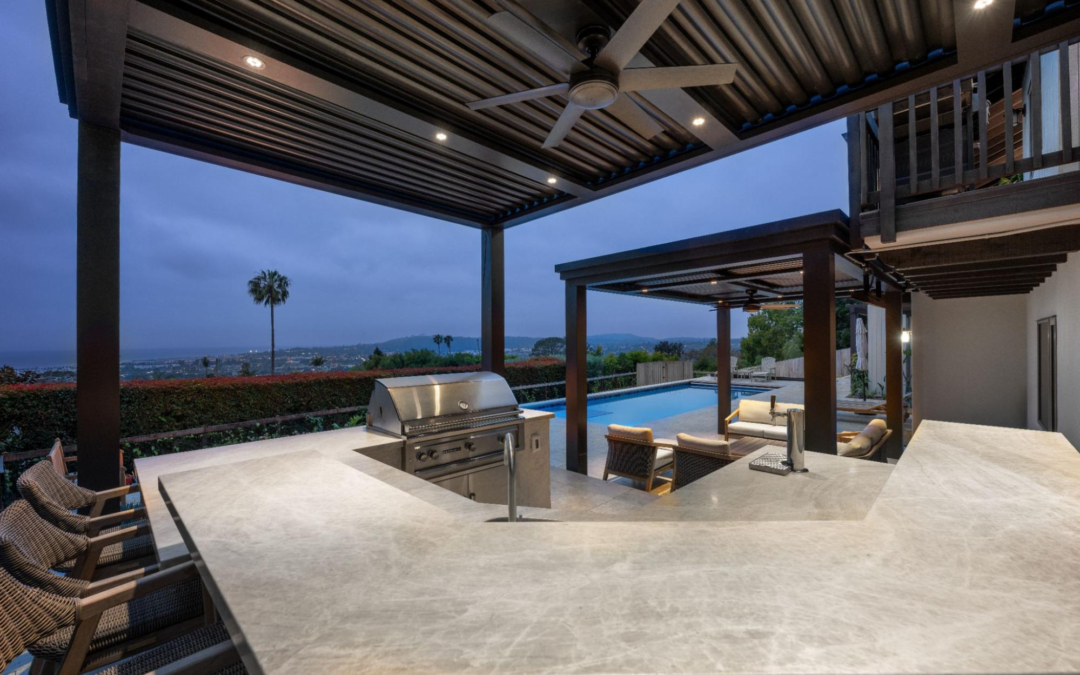
Not every project needs every luxury amenity. The strongest designs are selective. They include features that genuinely support the way the property will be used. An outdoor kitchen should be tailored to the home’s architecture, the surrounding landscape, and the way homeowners actually entertain.

A serious outdoor kitchen often goes beyond a built-in grill and may include:

  • Refrigeration
  • Ice storage
  • Sink access
  • Concealed trash storage
  • Warming drawers
  • Ample prep surfaces
  • Bar seating

These seven features can make an outdoor kitchen more functional without making the space feel overloaded. The right combination depends on the property’s layout, entertaining habits, and overall design goals.

Around the pool, homeowners may consider:

  • Baja shelves
  • Integrated spas
  • Submerged bar stools
  • Fire bowls
  • Water features
  • Perimeter overflow details

Each element should support the broader composition. A feature is only luxurious if it belongs.


Shade, Lighting, and Comfort Layers


Some of the most important decisions are not the flashy ones. Shade structures, landscape lighting, wind screening, and audio integration shape whether a backyard feels livable from noon to late evening.

A covered outdoor kitchen can dramatically improve comfort and appliance longevity. Pergolas, cantilever umbrellas, and architectural overhangs help define use zones without making the yard feel enclosed.

Lighting deserves equal attention. Pool illumination, step lights, tree uplighting, and subtle task lighting at the outdoor kitchen all contribute to atmosphere and safety. The goal is not brightness. It is depth and mood.


Why 3D Design Is Invaluable for Luxury Outdoor Spaces


An outdoor kitchen pool backyard is too significant an investment to leave to imagination alone. Detailed 3D planning allows homeowners to see how water, hardscape, structures, appliances, and sightlines will work together before construction begins.

Visualization helps answer questions that flat drawings often cannot:

  • Will the outdoor kitchen block a view from the great room?
  • Does the fire feature feel appropriately scaled?
  • Is the dining terrace large enough once chairs are pulled back?
  • How do the different outdoor zones connect?

For design-forward projects, this stage is not a luxury add-on. It is part of protecting the outcome.


Common Mistakes in High-End Backyard Design


One of the most frequent mistakes is treating the pool and outdoor kitchen as separate projects with separate priorities. That approach usually produces a backyard with too many focal points and not enough harmony.

Another issue is underestimating infrastructure. Outdoor kitchens require thoughtful utility planning, including gas, electrical, drainage, ventilation, and sometimes water lines that must coexist with pool systems, lighting, and automation.

There is also the temptation to overbuild. More square footage, more appliances, and more features do not automatically create a better experience. In many cases, restraint is what makes a space feel bespoke.


Final Thoughts


A well-executed outdoor kitchen pool backyard can absolutely enhance property value, but for discerning homeowners, the deeper return is lifestyle. It changes how the home is used. It creates a setting for family dinners, milestone celebrations, quiet mornings, and weekends that feel like an escape without leaving home.

That is why design, engineering, craftsmanship, and project supervision must work together from the start. In premium outdoor environments, details are not cosmetic. They are structural to the experience.

At Fluidity Pool Designs, we believe the goal is not simply to install components. It is to shape an outdoor setting with permanence, elegance, and purpose. If you’re ready to create a backyard that feels thoughtfully composed from every angle, visit our contact page to start the conversation.

The best backyard is not the one with the most features. It is the one that feels so natural to your home and your life that you cannot imagine the property any other way.

Ryan Clow, Owner
Fluidity Pool Designs
805-669-1200
[email protected]

Dive Into More Design Ideas

Do Luxury Pools Add Value to Homes in CA?

Do Luxury Pools Add Value to Homes in CA?

A panoramic view is only part of what distinguishes a remarkable Southern California property. Buyers in Malibu, Pacific Palisades, Hidden Hills, and Montecito often expect the exterior to carry the same level of intention as the interiors. So, do luxury pools add...
Luxury Backyard Design That Increases Home Value

Luxury Backyard Design That Increases Home Value

Luxury backyard design does more than create a beautiful place to relax. It extends the architecture of the home, enhances everyday living, and can significantly increase property value. For luxury homes throughout Malibu, Pacific Palisades, Montecito, Topanga,...

Pool Landscape Design: Creating a Seamless Luxury Outdoor Experience

Pool Landscape Design: Creating a Seamless Luxury Outdoor Experience

Pool landscape design is what transforms a backyard from a collection of separate features into a complete outdoor experience. A beautiful pool alone can create a stunning focal point, but the most memorable luxury properties are those where architecture, landscaping,...

Modern Pool Design Trends for Luxury Homes in Malibu & Pacific Palisades

Modern Pool Design Trends for Luxury Homes in Malibu & Pacific Palisades

Modern pool design trends are transforming luxury outdoor spaces throughout Southern California. Today’s homeowners are looking beyond traditional backyard pools and creating architectural environments that seamlessly connect the home, landscape, and surrounding views. In communities like Malibu and Pacific Palisades, where ocean vistas, hillside properties, and exceptional architecture define the landscape, a thoughtfully designed pool becomes much more than a place to swim. It becomes an extension of the home itself.

For luxury properties, the most successful pool designs balance clean aesthetics with everyday functionality. From infinity edges that frame coastal views to integrated outdoor living spaces that encourage year-round entertaining, modern pool design trends focus on creating environments that feel intentional, timeless, and deeply connected to their surroundings.


Modern Pool Design Trends Begin With Architectural Integration


The most defining characteristic of modern pool design trends is the connection between architecture and landscape. Rather than treating the pool as a separate feature placed in the backyard, contemporary luxury designs consider the entire property as one cohesive composition.

The pool’s shape, materials, placement, and surrounding elements should complement the home’s existing architecture. A minimalist coastal residence in Malibu may call for strong linear forms, expansive water features, and uninterrupted views toward the ocean. A hillside property in Pacific Palisades may require a design that responds to elevation changes while maximizing privacy and scenery.

This integrated approach creates outdoor spaces that feel natural to the property rather than simply added after construction.


Clean lines create timeless luxury


One of the most recognizable elements of modern pool design is simplicity. Clean geometric shapes, streamlined edges, and carefully considered proportions create a refined aesthetic that remains timeless.

Rather than relying on excessive features or decorative elements, modern designs emphasize balance, negative space, and architectural clarity. The result is a pool environment that feels sophisticated without feeling over-designed.


7 Modern Pool Design Trends Shaping Luxury Homes


1. Infinity-edge pools that embrace the landscape

Infinity pools continue to be one of the most sought-after features for luxury homes, especially properties with elevated views. By allowing the waterline to visually disappear into the surrounding landscape, infinity-edge pools create a seamless connection between the backyard and the horizon.

For Malibu homes overlooking the Pacific Ocean or hillside residences in Pacific Palisades, this design approach transforms the view into part of the pool experience itself.


2. Seamless indoor-outdoor living spaces

One of the strongest modern pool design trends is creating a continuous transition between interior and exterior spaces. Large glass doors, matching materials, covered outdoor rooms, and thoughtfully positioned seating areas allow homeowners to move effortlessly between the home and backyard.

The goal is not simply adding outdoor amenities but expanding the overall living experience.


3. Natural materials and refined textures

Modern luxury does not always mean minimal. Many contemporary pool designs incorporate natural materials such as stone, wood accents, porcelain, and textured finishes to create warmth and depth.

The right material palette helps the pool feel connected to the surrounding environment while adding durability and visual interest. For coastal homes, materials must also be selected with Southern California’s sun, salt exposure, and climate conditions in mind.


4. Integrated water and fire features

Water features, fire bowls, and architectural fireplaces add movement, atmosphere, and visual interest to modern pool environments. When carefully integrated, these elements enhance the design without overwhelming the clean aesthetic.

Fire features are especially valuable for extending the use of outdoor spaces into the evening, creating comfortable gathering areas after sunset.


5. Resort-style pool amenities

Luxury homeowners increasingly want their backyards to feel like private retreats. Modern pool design trends now include features such as Baja shelves, integrated spas, underwater seating, swim-up areas, and custom lounging spaces.

These amenities are designed around how homeowners actually use the space, creating a backyard that supports relaxation, entertaining, and everyday enjoyment.


6. Smart pool technology

Technology has become an important part of modern luxury pool design. Automated lighting, temperature control, water features, covers, and maintenance systems allow homeowners to manage their pool environment with greater convenience.

The best technology is integrated seamlessly so that it improves the experience without distracting from the overall design.


7. Sustainable and efficient design choices

Sustainability continues to influence modern pool design trends throughout California. Energy-efficient pumps, automated systems, responsible landscaping, and water-conscious features allow homeowners to create beautiful outdoor environments with improved efficiency.

Thoughtful sustainability is especially important in areas like Malibu, Pacific Palisades, and surrounding communities where homeowners value both design excellence and environmental responsibility.


Designing Pools for Malibu and Pacific Palisades Properties


Every luxury home has unique opportunities and challenges. Malibu properties often center around dramatic coastal views, challenging terrain, and the desire to maximize the relationship between architecture and ocean surroundings. Pacific Palisades homes frequently combine privacy, hillside elevations, and sophisticated residential architecture that requires careful planning.

Modern pool design trends must always be adapted to the specific property. A successful design considers the home’s proportions, natural surroundings, views, privacy needs, and how the homeowners want to experience the space.


Hillside properties require thoughtful engineering


Many luxury homes throughout Malibu and Pacific Palisades are built on sloped terrain. These properties offer incredible views but require specialized planning to address grading, structural requirements, drainage, and elevation changes.

When engineering and design work together from the beginning, challenging landscapes can become some of the most visually striking outdoor environments.


The Importance of Timeless Design Over Short-Term Trends


While modern pool design trends provide inspiration, the most valuable luxury pools are not designed around passing styles. They are created around timeless principles: proportion, craftsmanship, material quality, and connection to the surrounding environment.

A well-designed pool should continue to feel sophisticated years after completion. By focusing on architectural harmony and thoughtful details, homeowners can create outdoor spaces that remain beautiful, functional, and valuable over time.


Luxury is found in the details


The difference between an ordinary pool and an exceptional one often comes down to craftsmanship. Precise material transitions, carefully aligned edges, integrated lighting, and intentional landscaping all contribute to a finished environment that feels effortless.

These details may not always be immediately noticeable, but they are what create a sense of refinement and permanence.


Create a Modern Pool Designed Around Your Home


At Fluidity, every pool begins with a design-first approach that considers architecture, landscape, engineering, and lifestyle together. Our goal is to create outdoor environments that feel uniquely connected to each property while reflecting the highest standards of craftsmanship.

Whether you are envisioning an oceanfront infinity pool in Malibu, a hillside retreat in Pacific Palisades, or a complete luxury backyard transformation, Fluidity creates custom environments designed to elevate the way you live outdoors. Contact Fluidity to begin your custom pool design journey.

For additional information on sustainable landscape practices in California, visit the California Department of Water Resources.

Ryan Clow, Owner
Fluidity Pool Designs
805-669-1200
[email protected]

Dive Into More Design Ideas
Do Luxury Pools Add Value to Homes in CA?

Do Luxury Pools Add Value to Homes in CA?

A panoramic view is only part of what distinguishes a remarkable Southern California property. Buyers in Malibu, Pacific Palisades, Hidden Hills, and Montecito often expect the exterior to carry the same level of intention as the interiors. So, do luxury pools add...

Luxury Backyard Design That Increases Home Value

Luxury Backyard Design That Increases Home Value

Luxury backyard design does more than create a beautiful place to relax. It extends the architecture of the home, enhances everyday living, and can significantly increase property value. For luxury homes throughout Malibu, Pacific Palisades, Montecito, Topanga,...

Pool Landscape Design: Creating a Seamless Luxury Outdoor Experience

Pool Landscape Design: Creating a Seamless Luxury Outdoor Experience

Pool landscape design is what transforms a backyard from a collection of separate features into a complete outdoor experience. A beautiful pool alone can create a stunning focal point, but the most memorable luxury properties are those where architecture, landscaping,...
Pool Automation Systems for Luxury Pools

Pool Automation Systems for Luxury Pools

A luxury pool should not require daily tinkering to feel exceptional. The best pool automation systems turn a complex outdoor environment into one intuitive experience, where water temperature, lighting, spa settings, fire accents, and circulation respond with precision the moment you want to entertain, unwind, or simply step outside.

For Southern California homeowners investing in a custom poolscape, pool automation systems are no longer a novelty feature. They are part of the architecture of comfort. When designed well, automation supports the visual rhythm of the space, protects equipment performance, and removes the small frictions that can make even a beautiful backyard feel high-maintenance.


What pool automation systems actually control


Most people first think of app-based control, and that is certainly part of the appeal. But the real value of pool automation systems is coordination. Instead of managing separate heaters, pumps, lights, valves, sanitizers, and spa functions one by one, the system ties them together into a single operating logic.

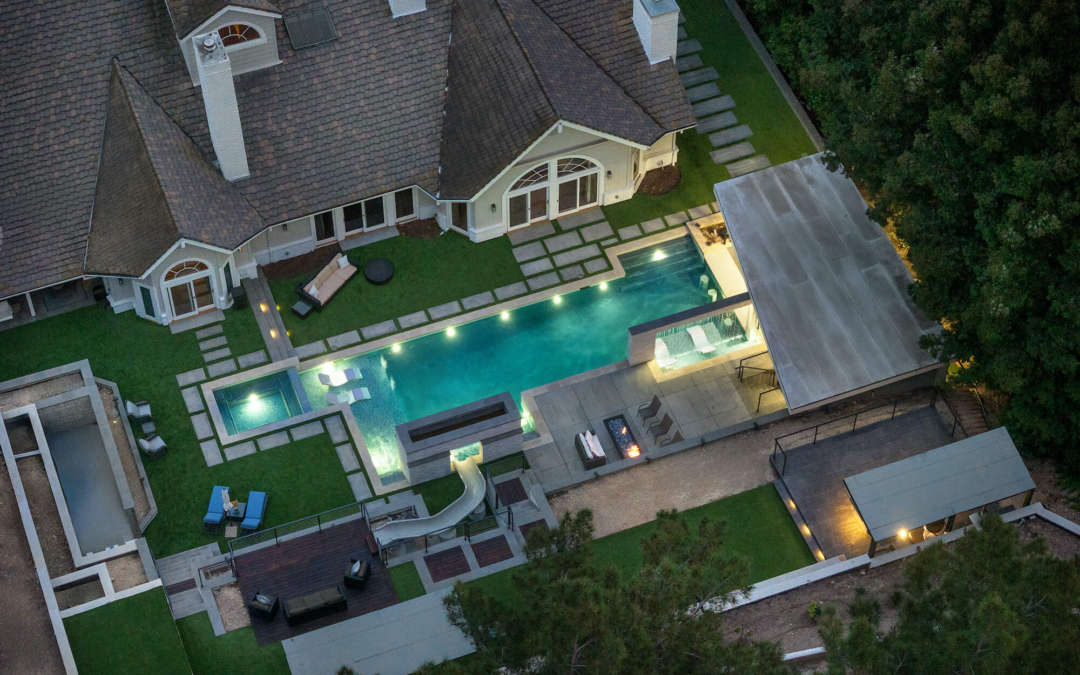
That can include pump speed scheduling, water temperature management, spa activation, pool and landscape lighting, waterfalls, deck jets, bubblers, salt chlorination, cleaning cycles, and in some cases fire features or outdoor audio. A well-integrated system does more than turn equipment on and off. It creates scenes and routines that match how the property is actually used.

For example, an evening entertaining setting might warm the spa, illuminate the pool in a softer color palette, activate select water features, and adjust filtration timing in the background. A morning setting may prioritize circulation and cleaning while the yard is quiet. The difference is subtle but meaningful. The outdoor environment begins to feel curated rather than managed.


Why automation matters more in high-end pool design


In a standard backyard, automation can be convenient. In a bespoke outdoor living environment, pool automation systems become foundational. Luxury pools often include multiple bodies of water, elevated spas, vanishing edges, perimeter-overflow details, feature lighting, advanced sanitization, and integrated hardscape elements. The more sophisticated the design, the more important it is that the systems behind it operate in harmony.

Without pool automation systems, complexity tends to show itself at the worst moments. A spa takes too long to heat before guests arrive. A water feature runs longer than necessary. Lighting scenes feel disconnected from the architecture. Equipment works harder than it should because schedules are not optimized.

With thoughtful automation, the technology fades into the background. That matters in a design-led project where the goal is not simply efficiency, but a composed outdoor experience. The homeowner should feel the benefit without having to think about the mechanism.


The lifestyle advantage of pool automation systems


Convenience is the most obvious benefit, but it is not the only one. For many homeowners, the deeper value is consistency. Your pool, spa, and surrounding features perform the way they should, whether you are home on a Wednesday evening or hosting a full weekend gathering.

That consistency changes how often the space gets used. A spa becomes more inviting when it can be heated before you walk outside. Pool lighting becomes part of the home’s evening ambiance when it is programmed around your routine. Water quality tends to remain steadier when pumps, sanitizers, and heaters are coordinated instead of adjusted reactively.

There is also a practical side that affluent homeowners tend to appreciate. High-end outdoor environments should feel polished, not labor-intensive. Pool automation systems reduce the need for manual intervention and can help identify performance issues earlier, especially when paired with professional monitoring and service. They do not eliminate maintenance, but they can make maintenance more intelligent.


Not all automation platforms are equal


This is where nuance matters. Many automation systems promise easy control, but the homeowner experience depends on three things: the quality of the platform, the logic of the programming, and the skill of the installation.

A strong platform should offer reliable mobile control, straightforward scheduling, expandable feature support, and compatibility with premium equipment. But hardware alone does not guarantee a refined result. If the system is poorly configured, even the best components can feel frustrating.

The right setup depends on the project. A compact plunge pool with a spa may need elegant simplicity. A larger estate property with an infinity edge, multiple pumps, dramatic lighting, and fire-water features requires a far more deliberate control strategy. There is no universal best answer. There is only the right answer for the pool, the property, and the client’s expectations.

This is one reason pool automation systems should be addressed during the design phase, not added as an afterthought. When the control system is considered early, equipment placement, conduit planning, feature integration, and user experience can be developed as one cohesive plan.


Design integration matters as much as technical integration


In luxury construction, technology should support the design language of the property. That means pool automation systems need to be considered beyond the equipment pad. The client interface matters. The responsiveness matters. Even the way scenes are named and organized matters.

A homeowner should not have to remember a maze of unlabeled functions to enjoy their backyard. Controls should feel intuitive and tailored to the home. If a poolscape includes a Baja shelf, raised spa, laminar jets, perimeter lighting, and a dining terrace with fire elements , the experience should still feel composed from a single touchpoint.

The same principle applies to visual restraint. Well-executed automation helps preserve clean lines and uncluttered outdoor spaces because fewer wall panels, remotes, and workaround controls are needed. In a property where architecture and landscape design are carefully curated, that restraint is part of the luxury.


Common decisions homeowners should make early


The first is whether you want simple remote control or fully programmed environment control. Some clients only want to adjust heat, lights, and spa settings from their phone. Others want complete scenario-based programming for entertaining, wellness routines, and energy management.

The second is how many features need to be integrated now versus prepared for later. It can be wise to build with future additions in mind, especially if there is a planned outdoor kitchen, expanded landscape lighting, or added fire elements in a later phase.

The third is who will manage the system after installation. Even the most advanced pool automation systems benefit from professional calibration, seasonal adjustments, and service support. For a high-value property, that ongoing relationship often matters just as much as the equipment itself.


Energy performance and equipment longevity


Homeowners often associate automation with luxury, but it also plays a quieter role in protecting the investment. Variable-speed pumps, heater schedules, circulation timing, and sanitization cycles can all be coordinated more efficiently through pool automation systems than by manual operation alone.

That does not mean every automated pool is automatically lower cost to operate. A larger, feature-rich pool with extensive lighting and heated water elements will still reflect its scale. But automation can help ensure the system runs with intention rather than waste. That distinction becomes significant over time.

Equipment longevity can also benefit when systems are balanced correctly. Pumps are not overworked unnecessarily. Heaters are triggered with greater precision. Water chemistry support systems can operate in more stable patterns. The outcome is not just convenience, but better stewardship of a substantial outdoor asset.


Renovations are often the right moment to upgrade


For older pools, upgrading pool automation systems can be one of the most transformative improvements available. Many legacy systems rely on outdated timers, manual valves, inconsistent lighting controls, and inefficient pump setups. The pool may still be structurally sound, yet the ownership experience feels dated.

A renovation is often the ideal time to modernize controls while also updating finishes, hydraulics, lighting, and equipment. In many cases, homeowners are surprised by how dramatically automation changes their day-to-day relationship with the space. The pool starts to feel current again, not just cosmetically refreshed.

For custom design-build firms such as Fluidity, this is where technical planning and elevated design should meet. Pool automation systems are not a side feature. They are part of how a backyard becomes a fully realized outdoor living environment.


What to expect from a well-executed system


The best result is not flashy. It is calm. You open an app or touch a control panel and the environment responds exactly as expected. The spa is ready when you want it. Lighting complements the architecture. Water features enhance the setting without creating operational headaches. Maintenance workflows become more predictable. The space feels easier to own.

That is the real promise of pool automation systems. Not more technology for its own sake, but a more effortless relationship with a space designed for beauty, leisure, and entertaining. When every element works in concert, the backyard stops feeling like a collection of features and starts feeling like a private resort shaped around the way you live.

If you are investing in a pool that is meant to elevate the entire property, pool automation systems deserve the same level of design attention as the tile, the waterline, and the view.

To learn more about integrating automation into a custom pool project, contact Fluidity Pool Designs.

Ryan Clow, Owner
Fluidity Pool Designs
(805) 669-1200
[email protected]

Dive Into More Design Ideas

Do Luxury Pools Add Value to Homes in CA?

Do Luxury Pools Add Value to Homes in CA?

A panoramic view is only part of what distinguishes a remarkable Southern California property. Buyers in Malibu, Pacific Palisades, Hidden Hills, and Montecito often expect the exterior to carry the same level of intention as the interiors. So, do luxury pools add...

Luxury Backyard Design That Increases Home Value

Luxury Backyard Design That Increases Home Value

Luxury backyard design does more than create a beautiful place to relax. It extends the architecture of the home, enhances everyday living, and can significantly increase property value. For luxury homes throughout Malibu, Pacific Palisades, Montecito, Topanga,...

Pool Landscape Design: Creating a Seamless Luxury Outdoor Experience

Pool Landscape Design: Creating a Seamless Luxury Outdoor Experience

Pool landscape design is what transforms a backyard from a collection of separate features into a complete outdoor experience. A beautiful pool alone can create a stunning focal point, but the most memorable luxury properties are those where architecture, landscaping,...
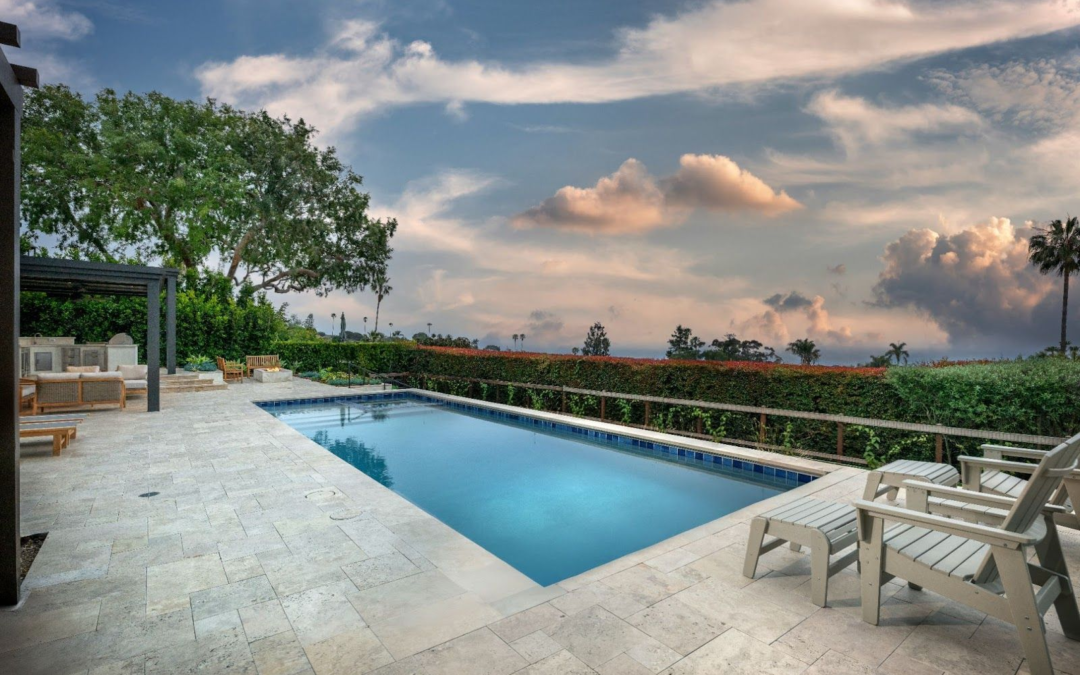
How to Design Seamless Indoor–Outdoor Living Spaces

How to Design Seamless Indoor–Outdoor Living Spaces

Creating a true outdoor living experience isn’t about adding a pool and patio—it’s about designing a space that feels like a natural extension of your home. When done right, there’s no clear line where the indoors end and the outdoors begin. Everything flows.

At Fluidity Pool Designs, this is one of the most important principles we bring into every project. Thoughtful outdoor living design considers architecture, landscape, circulation, views, materials, lighting, and the way a family actually uses the property. Here’s how to design it the right way.

For Southern California homeowners, outdoor living is more than an occasional luxury. With a climate that encourages time outside throughout much of the year, the backyard can become another room of the home. The right design makes that room feel intentional, comfortable, and connected to everything around it.


1. Start With Flow, Not Features


Most people begin with “I want a pool, a fire pit, and a kitchen.” That’s backwards.

Start with:

  • How people will move through the space
  • Where sightlines land from inside the home
  • How each area connects

A well-designed outdoor living space should feel intuitive—like it was always meant to be there. Before choosing individual features, consider how the entire property will function from morning through evening. The best outdoor living environments create natural connections between cooking, dining, swimming, relaxing, and entertaining.

Flow also helps determine where major features belong. A pool positioned directly outside a main living area may create a stronger visual connection than one placed farther into the yard. An outdoor kitchen may work best near the home for convenience, while a lounge or fire area can create a quieter destination farther from the house.


2. Align Elevations and Transitions


One of the biggest mistakes we see is poor elevation planning.

To create seamless outdoor living:

  • Match interior floor height to exterior decking when possible
  • Use wide, gradual transitions instead of steps
  • Keep thresholds clean and minimal

The goal is to eliminate physical and visual barriers. When elevations are planned carefully, the transition from interior rooms to outdoor living areas feels almost effortless. This is especially important when large glass doors or expansive openings connect the home to the backyard.

Elevation planning also becomes increasingly important on sloped properties. Rather than treating changes in grade as an obstacle, a thoughtful design can use them to create distinct levels for dining, lounging, entertaining, and swimming while maintaining a strong visual relationship between each space.


3. Carry Materials From Inside to Outside


Consistency in materials is key.

Examples:

  • Extend flooring tones from interior to exterior
  • Use similar stone, tile, or textures
  • Keep color palettes cohesive

This creates a unified look that visually expands your living space. Material continuity is one of the simplest ways to make outdoor living feel like a genuine extension of the architecture rather than a separate backyard installation.

That does not mean every surface needs to be identical. Instead, look for relationships in tone, texture, scale, and finish. A natural stone used inside might inspire an exterior paving material with a similar color family, while wood accents can be repeated through doors, pergolas, furniture, or architectural details.

In luxury outdoor living design, restraint often creates a more sophisticated result than introducing a new material at every turn.


4. Design Around Views


Your outdoor space should frame what matters most.

From inside your home:

  • What do you see first?
  • Where does your eye land?

A well-placed pool, water feature, or fire element can act as a focal point that pulls the entire space together. The view should be considered from multiple perspectives, including the kitchen, living room, primary bedroom, dining area, and outdoor seating.

For properties with ocean, canyon, hillside, or landscaped views, this becomes even more important. The design should enhance the existing setting rather than compete with it. In some cases, the best outdoor living design is the one that frames the landscape so naturally that the architecture seems to disappear.


5. Integrate the Pool as Architecture


The pool shouldn’t feel like an add-on.

In high-end outdoor living design:

  • The pool is part of the structure
  • It aligns with the home’s geometry
  • It reinforces the overall layout

This is where most designs fall short—and where proper planning makes all the difference.

A pool can become one of the strongest architectural elements of the property when its proportions, orientation, materials, and surrounding hardscape are considered alongside the home. The waterline, coping, decking, steps, and surrounding landscape should all contribute to one cohesive composition.

This approach also creates a stronger foundation for outdoor living. When the pool is integrated into the overall architecture, it can naturally connect to dining terraces, lounge areas, fire features, and outdoor kitchens instead of sitting apart from them.


6. Think in Zones


Break the space into functional areas:

  • Dining
  • Lounge
  • Water
  • Fire
  • Circulation paths

Each zone should feel connected but distinct. The transitions between them matter just as much as the zones themselves.

A successful outdoor living plan gives every area a purpose. Dining should have enough room for comfortable movement around the table. Lounge areas should feel inviting without blocking circulation. Pool zones should allow people to move safely between the water, seating, and other parts of the yard.

Consider how these zones will work at different times of day, too. A shaded breakfast area may be ideal in the morning, while a fire feature and lounge area can become the center of outdoor living after sunset. Designing for these shifts creates a backyard that feels useful rather than decorative.


7. Plan Lighting Early


Lighting is often an afterthought—but it shouldn’t be.

To elevate outdoor living:

  • Layer ambient, task, and accent lighting
  • Highlight architectural elements
  • Illuminate pathways and transitions

Good lighting extends usability and completely changes how the space feels at night. It can draw attention to architectural details, illuminate a pool or water feature, create a comfortable dining environment, and make circulation paths easier to navigate.

The goal is not to make the backyard as bright as possible. Effective outdoor lighting creates depth and atmosphere while allowing certain areas to recede into shadow. When lighting is integrated during the design process, fixtures can be positioned strategically and concealed where appropriate.

For outdoor living spaces designed around entertaining, lighting should also respond to how the property is used. Cooking areas need practical task lighting, while lounge and pool areas may benefit from softer illumination.


8. Don’t Ignore Mechanical Planning


Behind every great outdoor space is a well-designed system.

This includes:

  • Equipment placement (hidden but accessible)
  • Proper drainage
  • Efficient hydraulics
  • Noise control

These details aren’t visible—but they determine how the space performs long term. Mechanical planning should happen alongside the design rather than after the aesthetic decisions have already been made.

This is particularly important for larger outdoor living projects with pools, spas, water features, outdoor kitchens, fire elements, lighting, and automation. Every system needs adequate infrastructure, and thoughtful planning can prevent equipment from disrupting the finished environment.

Good drainage is equally important. Water should move away from the home and occupied areas without creating awkward grading or visible infrastructure. Equipment should remain accessible for service while being positioned so it does not interfere with the experience of the backyard.


Design for Comfort in Every Season


Beautiful outdoor living should also be comfortable. Southern California weather makes outdoor spaces usable for much of the year, but sun exposure, wind, temperature changes, and evening conditions still influence how often a space gets used.

Shade can come from architectural overhangs, pergolas, umbrellas, mature landscaping, or carefully positioned structures. Heating elements, fire features, and outdoor fireplaces can extend the evening experience when temperatures drop.

The most successful outdoor living designs layer these comfort features into the architecture instead of treating them as temporary additions. A shaded dining area can become part of the home’s visual language, while a fire feature can serve as both an architectural focal point and a source of warmth.


Make Outdoor Living Feel Like Home


The final step is personalization. A backyard should reflect the people who live there, not simply replicate a collection of popular luxury features.

Think about how you naturally spend your time. Do you prefer long dinners with friends, quiet mornings by the pool, evening gatherings around a fire, or weekends spent cooking outdoors? Those habits should influence the layout, furniture, lighting, pool design, and amenities.

When outdoor living is designed around real behavior, the result feels more personal and more valuable. The backyard becomes a setting for everyday routines as well as special occasions.


Final Thoughts


True outdoor living isn’t about adding more—it’s about designing smarter.

When everything flows—from the interior to the exterior, from one zone to the next—you don’t just get a backyard. You get a complete living environment.

The strongest outdoor living spaces balance beauty with function. They consider architecture, circulation, views, materials, lighting, comfort, and mechanical systems from the beginning so every decision supports the next.

At Fluidity Pool Designs, we focus on creating spaces that feel intentional, functional, and built to last. Our approach to outdoor living brings together thoughtful planning and custom pool design to create environments that feel connected to the home and natural to the way you live.

Ryan Clow, Owner
Fluidity Pool Designs
(805) 669-1200
[email protected]

Dive Into More Design Ideas

Do Luxury Pools Add Value to Homes in CA?

Do Luxury Pools Add Value to Homes in CA?

A panoramic view is only part of what distinguishes a remarkable Southern California property. Buyers in Malibu, Pacific Palisades, Hidden Hills, and Montecito often expect the exterior to carry the same level of intention as the interiors. So, do luxury pools add...

Luxury Backyard Design That Increases Home Value

Luxury Backyard Design That Increases Home Value

Luxury backyard design does more than create a beautiful place to relax. It extends the architecture of the home, enhances everyday living, and can significantly increase property value. For luxury homes throughout Malibu, Pacific Palisades, Montecito, Topanga,...

Pool Landscape Design: Creating a Seamless Luxury Outdoor Experience

Pool Landscape Design: Creating a Seamless Luxury Outdoor Experience

Pool landscape design is what transforms a backyard from a collection of separate features into a complete outdoor experience. A beautiful pool alone can create a stunning focal point, but the most memorable luxury properties are those where architecture, landscaping,...
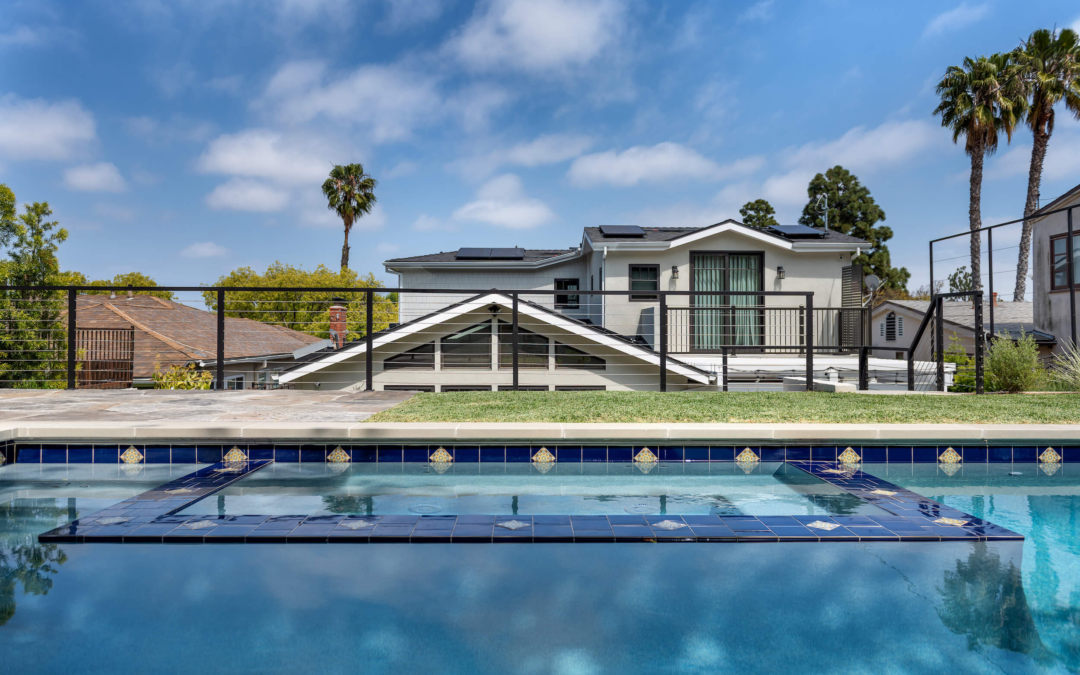
Choosing the Best Pool Finishes for Modern Homes

Choosing the Best Pool Finishes for Modern Homes

A pool finish is not simply the surface beneath the water. It determines whether a backyard reads as crisp and architectural, softly coastal, or richly resort-inspired from the first glimpse through the glass. For homeowners weighing the best pool finishes for modern homes, the decision deserves the same care as the home’s stone, cabinetry, and lighting. Water magnifies color, reflects the sky, and draws attention to every material choice around it.

In Malibu, Pacific Palisades, Hidden Hills, and Montecito, that effect is especially pronounced. Intense sun, changing coastal light, drought-conscious landscape palettes, and indoor-outdoor architecture all influence the way a finish performs visually. The right selection creates a composed relationship between pool, spa, coping, hardscape, and horizon. The wrong one can make an otherwise exceptional design feel disconnected or dated.

Choosing among the best pool finishes for modern homes also means looking beyond the initial color sample. Texture, durability, water chemistry, maintenance, and the relationship between the pool and surrounding architecture all contribute to the finished result.


What Makes a Pool Finish Feel Modern?


Modern pool design is often described as minimal, but restraint is only part of the equation. A contemporary pool finish should have visual depth without appearing busy, hold its color beautifully across changing conditions, and support the architecture rather than compete with it. In a sharply linear pool, for example, a refined deep-gray finish can reinforce clean geometry. In a softer, landscape-led setting, a pale aggregate may create the quiet, luminous water associated with a private coastal retreat.

The water color seen from the terrace is never just the finish color. It is shaped by depth, sun angle, tile, interior shade, surrounding walls, nearby planting, and the sky. A sample viewed dry in a showroom can appear dramatically different once installed across a large vessel and filled with water. That is why material selection should happen alongside the broader design, not as a final construction decision.

A finish must also meet the realities of use. A showpiece pool with an uncomfortable floor, overly reflective surface, or demanding maintenance profile may not suit a family that swims daily and entertains often. The most sophisticated choice is one that balances appearance, tactile comfort, longevity, and the way the property will actually be lived in. These considerations are what separate the most successful pool finishes for modern homes from choices based solely on color.


Best Pool Finishes for Modern Homes


There are five finish categories that consistently offer strong design possibilities for contemporary residences. Each creates a different relationship between the water, architecture, and surrounding landscape, making it important to understand the strengths and trade-offs of each option.

1. Porcelain and Ceramic Tile

For a highly tailored, architectural result, full-tile interiors remain among the most luxurious options. Large-format porcelain tiles can create a calm, monolithic appearance, particularly in charcoal, soft white, muted sand, and blue-gray palettes. Smaller ceramic mosaics offer more movement and can give a spa or perimeter-overflow pool a jewel-like quality without overwhelming the space.

Tile is especially compelling for pools with precise lines, raised spas, sun shelves, vanishing-edge pools, and detailed water features. It offers exceptional color consistency and can be easier to clean than more textured finishes. It also commands a higher investment, and installation quality is nonnegotiable. Alignment, substrate preparation, grout selection, expansion details, and finish transitions all need expert coordination for the result to look truly refined.

For many modern residences, porcelain is the more understated choice, while glass mosaic is best reserved for focal areas. A fully glass-tiled pool can be extraordinary, but it should be chosen with intention. In strong California sunlight, highly reflective finishes may create more sparkle than a quiet, contemporary composition requires.

Porcelain and ceramic tile are particularly effective pool finishes for modern homes when the goal is architectural precision and a highly edited material palette.


2. Premium Pebble and Exposed Aggregate

Premium pebble finishes are a leading choice for homeowners who want depth, durability, and a nature-inspired look. Small polished stones are exposed at the surface, producing nuanced water color and a finish that complements organic modern architecture, limestone decks, warm wood details, and layered planting.

The finish can range from pale and luminous to dark and dramatic. Soft ivory and light-gray aggregates tend to produce clear blue or aqua water, while charcoal blends create a more reflective, inky tone. A medium gray often offers the most adaptable result, giving water a clean blue-gray presence while concealing minor debris better than very pale interiors.

Texture is the central trade-off. A quality pebble surface is durable, but it generally feels more textured underfoot than plaster or tile. Polished pebble and smaller aggregate blends can soften that sensation substantially. For pools intended for frequent barefoot use, the specific material sample matters as much as the color name.

For homeowners searching for natural-looking pool finishes for modern homes, premium pebble and exposed aggregate can add depth while maintaining a sophisticated connection to the landscape.


3. Polished Aggregate and Mini Pebble

Polished aggregate and mini pebble finishes occupy a particularly appealing middle ground. They offer more depth and resilience than traditional plaster while presenting a smoother, more tailored surface than larger exposed pebble. Their fine scale suits contemporary projects where the pool needs to feel elevated but not overly decorative.

This category works beautifully with pale stone patios, board-formed concrete, white stucco, and modern Mediterranean architecture. It can also create sophisticated dark-water effects without the high reflectivity of glass tile. Because the aggregate is finer, visual variation appears controlled and elegant from a distance.

For a residence where the pool is central to daily outdoor living, mini pebble often earns its place as the practical luxury choice. It has enough character to prevent the water from looking flat, yet its texture and maintenance profile remain well suited to an active household.

Among the many pool finishes for modern homes, polished aggregate and mini pebble offer an appealing balance of visual depth, durability, and everyday comfort.


4. Quartz Plaster

Quartz plaster is a refined upgrade from standard plaster, blending cement with quartz aggregate for added strength and subtle sparkle. It is available in a broad range of colors and can achieve clean, even water tones that suit streamlined pool forms. Light quartz interiors are especially effective for homeowners seeking bright, inviting water without the visual movement of a pebble surface.

Its appeal lies in its polished simplicity. In the right palette, quartz can make a geometric pool feel fresh, tailored, and quietly luxurious. It is generally smoother underfoot than exposed aggregate, which is valuable for shallow lounging areas and play-friendly pool floors.

The consideration is longevity. Like other cementitious finishes, quartz requires attentive water chemistry and thoughtful maintenance to preserve its appearance. It may not offer the same long-term forgiveness as tile or premium pebble, particularly in a heavily used pool. Still, when paired with disciplined care and a considered design, it can deliver a beautiful modern result.

Quartz plaster is one of the more versatile pool finishes for modern homes for homeowners who want a refined appearance without the visual complexity of larger aggregate.


5. Classic Plaster

Traditional plaster has a place in select designs, particularly when the desired look is clean, simple, and cost-conscious relative to more elaborate materials. White plaster delivers the familiar, bright-blue pool color many homeowners associate with Southern California living. Colored plaster can create a more tailored effect, from soft gray-blue to deep cobalt.

For a high-end modern home, however, standard plaster is usually best approached as a deliberate aesthetic decision rather than the default. Its uniform appearance can be appealing in a restrained setting, but it offers less depth and typically a shorter service life than upgraded aggregate finishes. Variations and mottling can also be more visible, particularly in darker colors.

Classic plaster can still be among the most appropriate pool finishes for modern homes when simplicity, familiar water color, and a restrained overall aesthetic are the priorities.


Selecting Water Color Before Selecting Material


Many finish decisions begin with a request for blue water. The better question is: what kind of blue, in what light, from which viewpoint? Pale interiors produce brighter, more transparent water. Mid-tone grays often yield a sophisticated blue-gray. Dark interiors create reflective, dramatic water that can visually extend the surrounding architecture and landscape.

For the best pool finishes for modern homes, water color should be evaluated as part of the entire composition rather than as an isolated material sample. The surrounding architecture, landscape, coping, tile, and lighting can all change how the finished water appears.

A dark finish is especially effective for vanishing-edge pools overlooking a canyon, cityscape, or distant ocean, where the water is intended to merge with the view. Yet dark interiors can absorb more heat and reveal mineral deposits or surface debris differently than lighter finishes. A pale finish feels more buoyant and expansive, though it may show leaves, dust, and imperfections more readily.

The spa deserves its own consideration. A finish that feels tranquil in a large pool can appear much darker in a smaller spa, where water depth is limited. Coordinating the materials is usually wise, but identical color is not always necessary. A restrained tile accent can distinguish the spa while preserving the larger composition.


Details That Protect the Design Intent


The most successful pool interiors are not chosen in isolation. Waterline tile, coping, deck material, grout tone, interior lighting, and even the color of the pool drain covers influence the finished scene. A richly veined stone coping paired with a highly variegated pool finish may introduce too much competing movement. Conversely, a quiet concrete terrace can give a nuanced pebble interior room to feel intentional.

For homeowners comparing pool finishes for modern homes, these surrounding details should be reviewed at the same time as the interior finish. The goal is to make every material support the same visual direction rather than allowing individual surfaces to compete.

Lighting changes the equation after sunset. Warm landscape lighting around a dark pool creates a reflective, cinematic surface, while cool-toned interior LEDs can make the same finish read more electric. Selecting lighting temperature and fixture placement early helps avoid a nighttime experience that contradicts the daytime design.

Material quality and construction precision are equally essential. Proper surface preparation, carefully managed water chemistry during startup, accurate tile setting, and consistent attention during installation protect both performance and visual integrity. At Fluidity, finish selections are considered within the complete outdoor environment, supported by detailed visualization and hands-on execution rather than treated as an isolated product choice.

Before committing to one of the many pool finishes for modern homes, view sizable samples outdoors beside the proposed coping and hardscape, ideally at more than one time of day. Then consider how the water should feel from inside the home, from the primary entertaining terrace, and from the pool itself. The right finish is the one that continues to look composed long after the first reveal, making the water feel inseparable from the architecture around it.


Ryan Clow, Owner
Fluidity Pool Designs
805-669-1200
[email protected]

Dive Into More Design Ideas

Do Luxury Pools Add Value to Homes in CA?

Do Luxury Pools Add Value to Homes in CA?

A panoramic view is only part of what distinguishes a remarkable Southern California property. Buyers in Malibu, Pacific Palisades, Hidden Hills, and Montecito often expect the exterior to carry the same level of intention as the interiors. So, do luxury pools add...

Luxury Backyard Design That Increases Home Value

Luxury Backyard Design That Increases Home Value

Luxury backyard design does more than create a beautiful place to relax. It extends the architecture of the home, enhances everyday living, and can significantly increase property value. For luxury homes throughout Malibu, Pacific Palisades, Montecito, Topanga,...

Pool Landscape Design: Creating a Seamless Luxury Outdoor Experience

Pool Landscape Design: Creating a Seamless Luxury Outdoor Experience

Pool landscape design is what transforms a backyard from a collection of separate features into a complete outdoor experience. A beautiful pool alone can create a stunning focal point, but the most memorable luxury properties are those where architecture, landscaping,...