
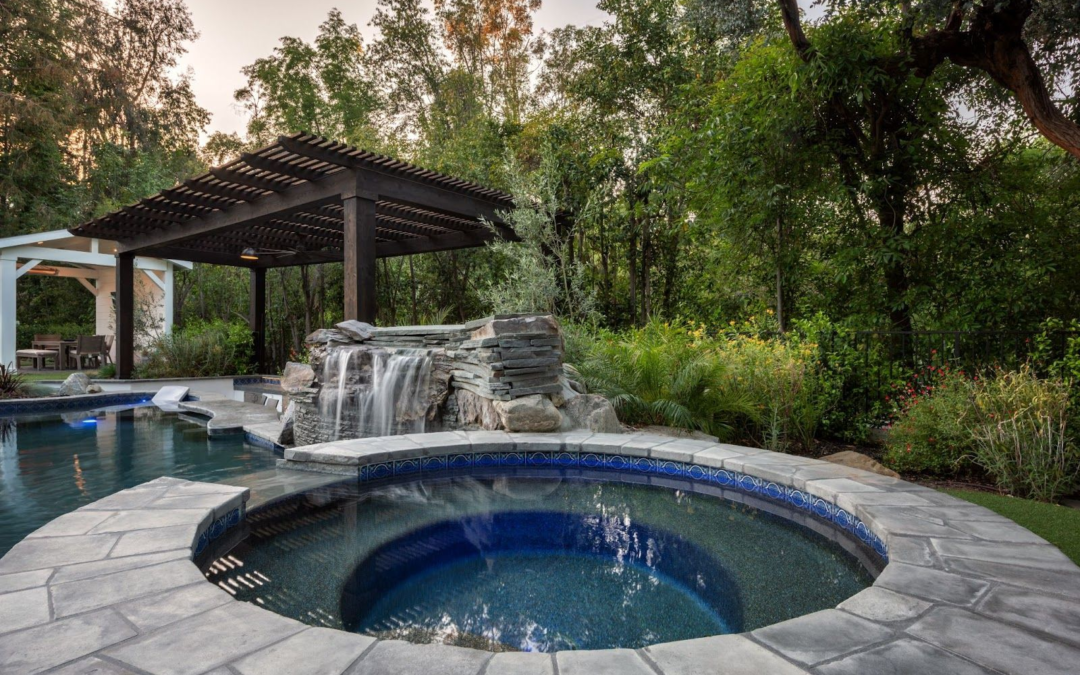
Building a pool is one of the most significant improvements you can make to your Southern California home. With the right design, a pool can create a beautiful outdoor living space while complementing your home’s architecture, landscape, and lifestyle.
However, building a pool involves much more than choosing a shape and selecting tile. Site conditions, permitting, safety requirements, equipment, materials, landscaping, and outdoor living spaces all play a role in the finished project.
For Southern California homeowners, the planning process can also vary depending on the property. Coastal homes, hillside properties, established neighborhoods, and larger estates can each present different opportunities and challenges.
Understanding what goes into building a pool before construction begins can help you make informed decisions and create a finished backyard that feels intentional from every angle.
1. Start With Your Property
Every property has its own opportunities and challenges. Before designing a pool, consider the size and shape of your yard, existing structures, elevation changes, access points, landscaping, property lines, and views.
A thoughtful site evaluation helps determine where the pool should go and how it should connect with the rest of the property. This is especially important for Southern California homes with sloped lots, limited backyard space, or established landscaping.
Existing trees, retaining walls, structures, and changes in elevation can all influence the layout. The location of the home, neighboring properties, and surrounding landscape can also affect privacy, sun exposure, and views.
When building a pool, the goal should not simply be to find an open area large enough for the water. The pool should be positioned in a way that works with the property as a whole.
A careful site evaluation at the beginning can help guide decisions throughout the rest of the project.
2. Understand Local Permits and Requirements
Building a pool typically requires permits and inspections. Local requirements can vary depending on your city and property, so your project should account for applicable zoning, building, electrical, plumbing, and safety regulations.
Southern California includes many different cities and jurisdictions, each with its own permitting process and property requirements. Setbacks, easements, grading, drainage, access, and other site-specific considerations may need to be evaluated before construction begins.
Pool projects may also involve multiple stages of review and inspection. Understanding these requirements early can help establish realistic expectations for the design and construction process.
Planning for permits from the beginning is an important part of building a pool. It can help prevent avoidable changes or delays after the project is already underway.
3. Design Around How You Live
The best pool design is not simply the most impressive one. It is the one that works naturally with the way you use your home and outdoor space.
Think about whether your pool will primarily be used for entertaining, relaxing, exercising, family time, or a combination of activities. These priorities can influence the pool’s size, depth, shape, seating areas, spa, and surrounding features.
If you frequently entertain, you may want generous areas for lounge seating, dining, or an outdoor kitchen. If relaxation is the priority, an integrated spa, tanning ledge, comfortable seating, or shaded areas may become more important.
When building a pool, these lifestyle considerations should be addressed before the layout is finalized. A pool designed around how you actually live can feel more useful and natural than one designed around features alone.
4. Consider the Entire Backyard
A pool should feel like part of the landscape rather than an isolated feature. Consider how the pool connects to patios, outdoor kitchens, fire features, planting areas, walkways, and other outdoor living spaces.
Think about how someone will move from the house to the pool, from the pool to an outdoor dining area, or from a lounge space into the landscape. These transitions should feel natural and comfortable.
Hardscape is also an important part of the overall composition. Decking, steps, patios, retaining walls, and pathways can help define different areas while creating a sense of continuity throughout the backyard.
Planning the entire backyard together allows building a pool to become part of a larger outdoor living plan rather than a standalone construction project.
A cohesive design can make the property feel more intentional while giving each area a clear purpose.
5. Plan for Southern California’s Climate
Southern California’s climate creates excellent conditions for outdoor living, but it should also influence your pool design. Sun exposure, wind, surrounding vegetation, and water use can all affect how your pool performs and how comfortable the surrounding spaces feel.
Consider how the sun moves across the property throughout the day. The orientation of the pool can influence water temperature, shade, glare, and how comfortable different areas are during morning and afternoon use.
Landscaping can also help create shade, privacy, and protection from the elements. Existing trees may provide valuable shade, while new planting can help frame the pool and connect it to the surrounding landscape.
Materials should also be selected with the outdoor environment in mind. Pool finishes, coping, decking, and tile need to complement the architecture while performing appropriately in Southern California conditions.
Considering climate early in the process can help create a more comfortable and efficient outdoor environment.
6. Prioritize Pool Safety From the Beginning
Safety should be incorporated into the design from the beginning rather than treated as an afterthought. California has specific requirements for residential swimming pools, including drowning-prevention features and anti-entrapment measures.
Depending on the property and project, safety considerations may include barriers, gates, alarms, pool covers, and appropriate equipment around drains and circulation systems.
The goal is to meet necessary requirements while incorporating safety features into the overall design. A thoughtfully planned barrier or gate can complement the architecture and landscape rather than feeling like an addition made at the last minute.
When building a pool, safety requirements should be considered alongside the layout, access points, surrounding hardscape, and outdoor living spaces.
Working through these details during the design phase can create a safer environment while keeping the finished backyard cohesive.
7. Choose Materials That Complement Your Home
Pool finishes, coping, decking, tile, and surrounding materials have a major impact on the final appearance. They also need to perform well in an outdoor environment.
Consider how each material will look alongside your home’s architecture and landscape. A contemporary home may call for clean lines and restrained materials, while a more traditional property may benefit from natural stone, textured finishes, or warmer details.
Color also plays an important role. Pool finishes can influence the appearance of the water, while coping and decking help establish the visual connection between the pool and surrounding spaces.
Rather than choosing each material independently, consider how the complete palette will look together.
Thoughtful material selection can help the pool feel like a natural extension of the property and can give the entire backyard a more cohesive appearance.
8. Think Beyond the Pool
Some of the most memorable backyard designs extend well beyond the water. Spas, tanning shelves, outdoor kitchens, fire features, cabanas, and integrated lighting can transform a pool area into a complete outdoor living environment.
These features should be selected based on how you want to use the space rather than simply adding as many amenities as possible.
An outdoor kitchen may make sense for homeowners who frequently entertain, while a fire feature can create a comfortable gathering point during cooler evenings. A tanning ledge can provide a shallow place to relax, while an integrated spa can extend the use of the pool area throughout the year.
When building a pool, planning these elements alongside the pool itself can create better connections between different areas of the backyard.
The strongest designs use features intentionally so the finished space feels balanced rather than crowded.
9. Invest in the Right Pool Equipment
Pool equipment affects everything from water quality to maintenance and energy use. Pumps, filtration, heating, lighting, automation, and water management systems should be considered during the design process.
Proper equipment sizing is particularly important. The system should be selected based on factors such as pool volume, circulation requirements, features, heating needs, and how the pool will be used.
Automation can also simplify the experience of owning a pool. Depending on the system, homeowners may be able to control pumps, heating, lighting, water features, and other functions through an integrated control system.
Equipment placement matters, too. The equipment area should provide adequate room for installation, maintenance, and future service while remaining as discreet as possible within the property.
Planning pool equipment early allows the mechanical systems to be integrated into the project rather than accommodated after the primary design is complete.
10. Work With an Experienced Pool Professional
Building a pool in Southern California requires coordination between design, engineering, permitting, construction, equipment, and the surrounding landscape. An experienced pool professional can help bring these pieces together from the beginning.
Look for a company that understands local requirements and approaches the project as a complete design rather than simply a construction job.
Experience can be particularly valuable when a property presents unique conditions such as a hillside, limited access, existing landscaping, or complex architectural relationships.
A knowledgeable pool professional can help identify potential challenges early, coordinate the different stages of the project, and develop a design that responds to the property rather than forcing a predetermined solution onto it.
When building a pool, having an experienced team involved from the beginning can help create a smoother process and a more cohesive finished result.
Plan for the Entire Pool Experience
Building a pool is an opportunity to create more than a place to swim. With thoughtful planning, your pool can become the foundation for a backyard designed around how you live, entertain, relax, and enjoy your home.
For Southern California homeowners, the strongest results come from approaching the project with design, site conditions, safety, materials, equipment, and long-term use in mind from the very beginning.
The pool itself is only one part of the experience. The surrounding landscape, hardscape, outdoor living spaces, lighting, and architectural details all contribute to how the finished property looks and feels.
By considering these elements together, building a pool can become an opportunity to create a more connected outdoor environment rather than simply adding a new feature to the backyard.
At Fluidity Pool Designs, we approach each project as a complete outdoor environment. From the initial site and design considerations through construction and equipment integration, our goal is to create custom pools that feel connected to the homes and landscapes around them.
If you are considering building a pool in Southern California, thoughtful planning from the beginning can help you create a space that is beautiful, functional, and designed specifically around your property and lifestyle.
Ready to start planning your pool?
Contact Fluidity Pool Designs to begin creating a custom pool and outdoor living environment designed specifically for your home.
Ryan Clow, Owner
Fluidity Pool Designs
805-669-1200
[email protected]
Dive Into More Design Ideas
How Long Does It Take to Build a Pool? A Complete Timeline
How long does it take to build a pool? It is one of the first questions homeowners ask when they begin planning a new pool. Understanding the pool construction timeline can help you know what to expect from the initial consultation through the final walkthrough. A...
How to Choose the Right Pool Lighting for Your Backyard
Your pool doesn’t disappear when the sun goes down. In fact, the right pool lighting can completely transform how your backyard looks and feels at night. Thoughtfully placed lights can highlight architectural details, improve safety, create a relaxing atmosphere, and...
9 Pool Features That Can Transform Your Backyard
The right pool features can transform a backyard from a place to swim into a complete outdoor environment. The best features are not simply added for appearance. They can improve how you use the pool, create a stronger connection between the pool and surrounding...