
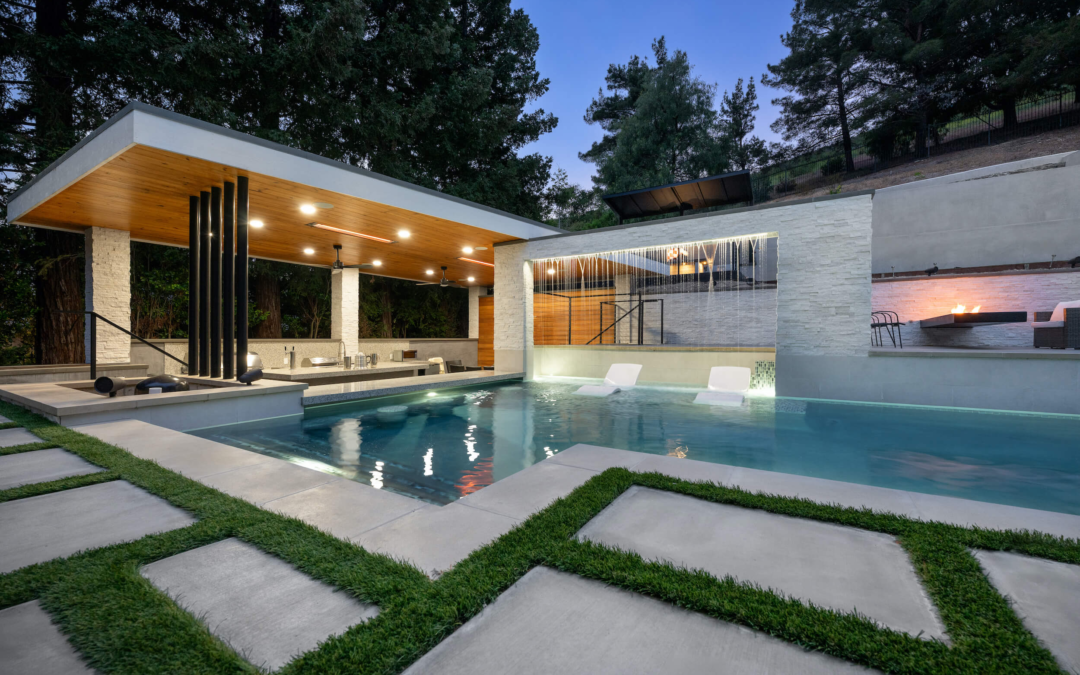
A new pool can completely transform a backyard, but the pool itself is only one part of the finished space. The most successful outdoor environments are planned as a whole, with the pool, patio, landscaping, dining areas, gathering spaces, and architectural details working together from the beginning.
Thoughtful backyard pool design considers more than where the water will go. It looks at how homeowners move through the property, where they want to relax, how they entertain, how the landscape frames the space, and how the backyard will feel throughout the day.
Whether you are starting with a blank canvas or working with an established landscape, planning the backyard around a new pool can help create an outdoor space that feels cohesive, functional, and intentional.
1. Start With How You Want to Use the Space
Before deciding on materials or features, think about how you want to experience your backyard.
Will the pool primarily be used for swimming and exercise? Will it be the center of family gatherings? Do you envision long afternoons lounging by the water, outdoor dinners with friends, or quiet evenings around a fire?
These questions can influence nearly every decision that follows.
For example, a backyard designed primarily for entertaining may benefit from generous seating, an outdoor kitchen, and dining space positioned close to the pool. A property focused on relaxation may prioritize comfortable lounge areas, shade, landscaping, and an integrated spa.
The goal of backyard pool design is not simply to fit a pool into the available space. It is to create an environment that supports the way you actually want to use your property.
Starting with your lifestyle gives the rest of the backyard pool design a clear direction, helping each feature serve a purpose within the finished space.
2. Plan the Pool and Hardscape Together
The pool and surrounding hardscape should be considered as one design rather than two separate elements.
Decking, patios, steps, retaining walls, pathways, and other hardscape features determine how the pool connects to the rest of the backyard. Their placement can also establish natural circulation throughout the space.
Consider how someone will move from the house to the pool, from the pool to an outdoor kitchen, or from a lounge area to the garden. These transitions should feel natural rather than requiring people to navigate around disconnected spaces.
The scale of the hardscape matters, too. A large pool surrounded by a narrow strip of decking may feel cramped, while too much hardscape can make a backyard feel stark.
Thoughtful backyard pool design finds the right balance between water, hardscape, landscaping, and open space.
Planning these elements together also gives backyard pool design a stronger sense of continuity, allowing the pool and surrounding spaces to feel like parts of one environment.
3. Create Zones for Relaxing and Entertaining
A backyard does not need to have one single purpose. Creating distinct zones can make the space feel larger and more versatile.
A pool area might include a combination of:
- Lounge seating
- Outdoor dining
- A shaded sitting area
- An outdoor kitchen
- A fire feature
- A spa
- Open lawn or garden space
- Poolside areas for sunbathing
These spaces do not necessarily need walls or barriers between them. Changes in paving materials, landscaping, furniture placement, elevation, or overhead structures can subtly define each area while keeping the backyard connected.
When planning backyard pool design, think about how these zones relate to one another. A dining area should be close enough to the kitchen to be convenient, while a quieter lounge might benefit from being positioned farther from the main gathering areas.
Creating these relationships during the design process can make the finished backyard feel more intentional and easier to use.
A well-planned backyard pool design allows each zone to have its own purpose while still contributing to the overall experience.
4. Design Outdoor Dining Around the Pool
For homeowners who enjoy entertaining, outdoor dining can become one of the most important parts of the backyard.
Instead of treating a dining table as an afterthought, consider how it will fit into the larger pool environment. Its location should provide enough space for comfortable movement while maintaining a connection to the pool and surrounding landscape.
An outdoor dining area can be positioned beneath a covered patio, pergola, or other shade structure. Depending on the property, it may also connect directly to an outdoor kitchen or entertaining area.
Backyard pool design should account for these spaces early so that circulation, utilities, shade, and sightlines are all considered together.
A well-planned dining area can also help the backyard transition naturally from daytime pool use to evening entertaining.
Incorporating dining into the backyard pool design from the beginning can create a more functional connection between cooking, gathering, and time spent around the water.
5. Use Landscaping to Connect the Backyard
Landscaping plays an important role in making a new pool feel like it belongs within the property.
Plants can soften hardscape, frame the pool, establish privacy, and connect different areas of the backyard. They can also create a sense of transition between the architecture of the home and the more natural parts of the landscape.
Existing trees and mature plantings should be considered carefully before construction begins. In some cases, preserving an established tree can help maintain the character of the property and provide shade or visual interest around the new pool.
New landscaping can then build upon those existing elements.
For backyard pool design, landscaping should not simply fill the spaces left after the pool and patio are complete. It should be part of the design from the beginning.
The right combination of planting, hardscape, and pool placement can make the entire backyard feel like one cohesive environment.
Bringing landscaping into the backyard pool design early can also help determine where privacy, shade, pathways, and gathering spaces should be positioned.
6. Plan for Privacy Without Closing In the Space
Privacy is another important consideration when planning a backyard around a new pool.
Depending on the property, privacy can be created through landscaping, walls, fencing, architectural screens, or strategic placement of outdoor structures. The goal is to provide a comfortable sense of separation without making the backyard feel enclosed.
Layered landscaping can be especially effective. Trees can provide height, while shrubs and lower plantings create additional screening closer to the pool.
Privacy should also be considered from multiple viewpoints. Think about what the pool looks like from the house, neighboring properties, outdoor seating areas, and other parts of the backyard.
Good backyard pool design balances privacy with openness. You want the space to feel private enough to enjoy, while still preserving important views and maintaining a connection to the surrounding landscape.
With privacy considered from the beginning, backyard pool design can create a comfortable retreat without sacrificing the openness of the property.
7. Consider Shade and Sun Exposure
A backyard can feel very different depending on the time of day, which makes sun exposure an important part of the planning process.
Some areas may benefit from full sun, particularly around the pool or a tanning ledge. Other areas may be more comfortable with shade, especially outdoor dining and lounge spaces.
Shade can come from existing trees, covered patios, pergolas, umbrellas, or architectural structures. Each option creates a different visual and functional experience.
When developing backyard pool design, consider how sunlight will move across the property throughout the day. A seating area that feels comfortable in the morning may receive intense afternoon sun, while another part of the yard may become shaded later in the day.
Planning around these patterns can help make the backyard more comfortable and usable throughout the day.
Sun exposure is an important part of backyard pool design because it can influence where people naturally gather, relax, dine, and spend time around the pool.
8. Think About Lighting From the Beginning
Outdoor lighting can dramatically change the atmosphere of a backyard after sunset. It can also improve visibility and help define different areas of the property.
Pool lighting can highlight the water, steps, and architectural features. Landscape lighting can draw attention to trees, planting, walls, and pathways. Lighting around patios and gathering spaces can create a warm, inviting environment for evening use.
Rather than adding lighting only at the end of the project, incorporate it into the overall design.
Backyard pool design can use lighting to create visual connections between the pool, home, landscape, and outdoor living spaces. Subtle lighting along pathways can guide movement, while strategically placed fixtures can emphasize architectural or landscape features.
The result should feel layered and intentional rather than overly bright.
Considering lighting early allows backyard pool design to remain visually connected after sunset, when different areas of the property can take on a completely different atmosphere.
9. Leave Room for the Details
It can be tempting to fill every available part of the backyard with features, but open space is also an important part of the design.
A well-planned backyard needs room to breathe.
Consider where children might play, where guests might gather, or where you may want to add furniture or landscaping in the future. Leaving some flexibility in the layout can make the property easier to adapt over time.
The same principle applies to the pool itself. Not every project needs multiple water features, fire elements, structures, or built-in amenities. The strongest designs are often the ones where each feature has a clear purpose.
Thoughtful backyard pool design is about creating balance. The pool should be an important focal point without overwhelming the rest of the property.
Leaving room for open space gives backyard pool design the flexibility to feel comfortable and natural rather than crowded with features.
10. Bring the Entire Backyard Together
Once the major elements have been considered, look at the backyard as one complete environment.
The pool should relate to the architecture of the home. The hardscape should connect the pool to outdoor living areas. Landscaping should soften and frame the built elements. Lighting should extend the experience into the evening. Furniture and finishing details should reinforce the overall character of the space.
Materials can also help create continuity. Repeating complementary stone, tile, wood, or other finishes across different areas can make separate zones feel connected without making everything look identical.
This is where thoughtful backyard pool design can make the greatest difference. Instead of seeing the pool, patio, landscape, and outdoor kitchen as individual additions, the entire backyard becomes one cohesive composition.
When every element is considered together, backyard pool design can create a space that feels connected from the home to the pool and throughout the surrounding landscape.
Design the Backyard Around the Way You Live
A new pool has the potential to become the center of your outdoor lifestyle, but creating a truly successful backyard requires looking beyond the pool itself.
The best backyard pool design considers how every part of the property works together, from the first step outside the house to the view from the pool, the placement of a dining table, the shade over a lounge area, and the landscape surrounding it all.
At Fluidity Pool Designs, we approach each project as a complete outdoor environment. By considering the pool, architecture, landscape, hardscape, and outdoor living spaces together, we can create a backyard that feels intentional from every angle.
A thoughtful backyard pool design can help ensure that the finished space feels connected to your home and supports the way you want to live outdoors.
When every element is considered together, your new pool can become more than a standalone feature. It can become the foundation for a backyard designed around how you live, gather, relax, and enjoy your home.
Ryan Clow, Owner
Fluidity Pool Designs
805-669-1200
[email protected]
Dive Into More Design Ideas
How Long Does It Take to Build a Pool? A Complete Timeline
How long does it take to build a pool? It is one of the first questions homeowners ask when they begin planning a new pool. Understanding the pool construction timeline can help you know what to expect from the initial consultation through the final walkthrough. A...
How to Choose the Right Pool Lighting for Your Backyard
Your pool doesn’t disappear when the sun goes down. In fact, the right pool lighting can completely transform how your backyard looks and feels at night. Thoughtfully placed lights can highlight architectural details, improve safety, create a relaxing atmosphere, and...
9 Pool Features That Can Transform Your Backyard
The right pool features can transform a backyard from a place to swim into a complete outdoor environment. The best features are not simply added for appearance. They can improve how you use the pool, create a stronger connection between the pool and surrounding...