
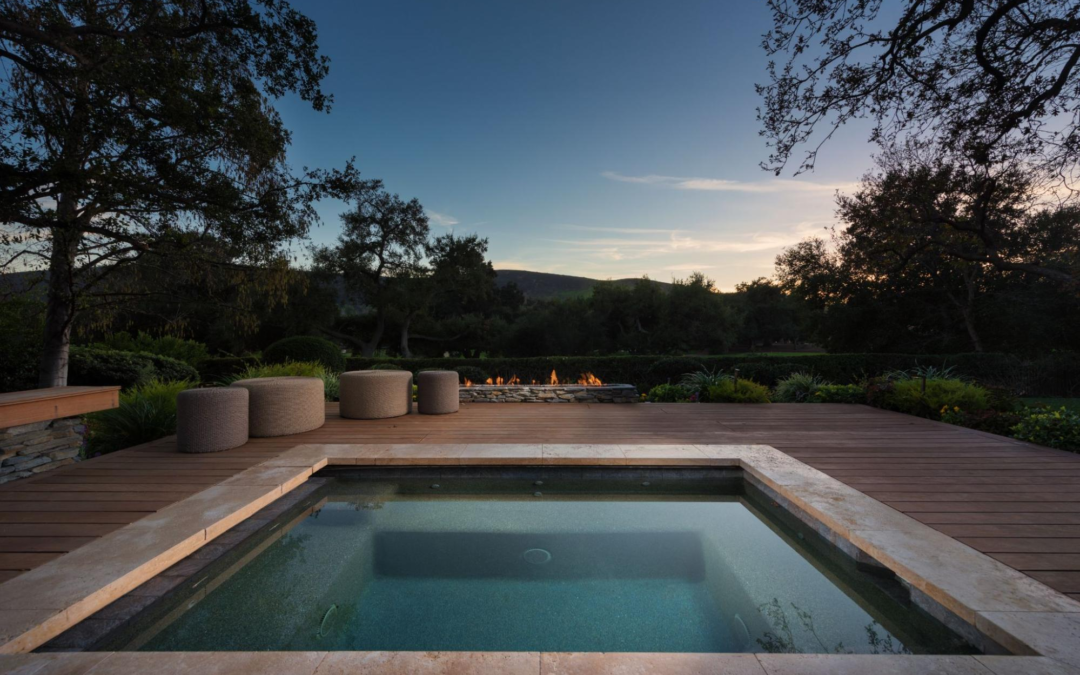
Pacific Palisades pool design begins with the landscape. Canyon properties, hillside lots, coastal-adjacent homes, established landscaping, and expansive views all create opportunities that can shape the way a pool fits into the property.
Rather than treating the pool as a separate feature, thoughtful design considers how water, architecture, hardscape, landscaping, and the natural setting can work together. For Pacific Palisades homeowners, this approach can create an outdoor space that feels connected to the home and its surroundings.
Here are nine considerations for creating a pool that works with the landscape.
1. Start With the Natural Setting
Every Pacific Palisades property has its own relationship to the landscape. A canyon home may have significant changes in elevation, while a property closer to the coast may have different views, exposure, and spatial constraints.
A successful Pacific Palisades pool design starts by understanding those conditions before deciding on the pool’s shape or placement. The location of the home, existing trees, grade changes, views, sun exposure, drainage, and surrounding structures can all influence the design.
Instead of forcing a predetermined pool into the backyard, the design should respond to what is already there. This can create a more natural relationship between the pool and the property while also making better use of the available space.
A thoughtful Pacific Palisades pool design preserves the character of the property while creating a more functional outdoor environment.
2. Make the Most of the Views
Views can be one of the defining features of a Pacific Palisades property. Depending on the location, a home may look toward the ocean, surrounding hills, canyons, or mature landscape.
The pool can help frame these views rather than compete with them. Its orientation, elevation, edge treatment, and surrounding hardscape should all be considered in relation to the most important sightlines from the home and backyard.
For a property with a dramatic change in elevation, an infinity edge may create a strong visual connection between the water and the horizon. On another property, a simpler pool shape positioned along a particular sightline may create a more effective result.
In Pacific Palisades pool design, the goal is not simply to create a beautiful pool. It is to determine where the pool can contribute to the experience of the entire property.
3. Work With the Existing Landscaping
Mature landscaping can give a backyard a sense of privacy, character, and permanence. Large trees, established planting areas, hedges, and natural vegetation can also influence where a pool can be placed.
Rather than clearing everything to create a blank canvas, consider how existing landscape features can become part of the design. A mature tree may help frame a lounge area. Planting can soften a hardscape edge or create privacy around the pool. Existing greenery can also help the finished project feel more established from the beginning.
At the same time, landscaping should be evaluated carefully before construction. Root systems, irrigation, drainage, and access all need to be considered so the pool can be built without creating unnecessary complications.
A thoughtful Pacific Palisades pool design finds a balance between preserving what works and making room for the new outdoor environment.
4. Design Around Hillside and Canyon Properties
Hillside and canyon properties can create some of the most dramatic pool settings in Pacific Palisades, but they also require careful planning. Elevation changes can affect pool placement, retaining structures, drainage, access, and engineering.
The terrain should be studied before the design is finalized. A pool may work best at one elevation while the main entertaining area works better at another. Connecting these spaces with steps, terraces, retaining walls, or carefully planned pathways can create a backyard that feels intentional rather than difficult to navigate.
On a sloped property, the landscape itself can become part of the architecture. Changes in elevation can create separate outdoor rooms, frame views, and give the pool a stronger relationship to the surrounding environment.
A Pacific Palisades pool design should work with the grade rather than trying to make the property behave as though it were flat.
5. Create Privacy Without Losing the View
Privacy can play an important role in the experience of a backyard pool. Pacific Palisades properties may be close to neighboring homes and established communities, making it important to create separation while preserving the openness of the landscape.
A Pacific Palisades pool design can use landscaping, changes in elevation, architectural screens, strategic planting, and the positioning of outdoor living areas to create privacy without completely enclosing the space.
A well-planned backyard should feel private without blocking the views that make the property special. Consider what can be seen from the home, neighboring properties, and different areas of the yard when determining the placement of the pool and surrounding spaces.
6. Connect the Pool to the Architecture
The pool should feel like a natural extension of the home. Its proportions, geometry, materials, and surrounding hardscape can all reinforce the architectural character of the property.
Clean architectural lines may work beautifully with a geometric pool, while a home surrounded by natural materials and mature landscaping may benefit from softer transitions between water, stone, and planting.
Views from inside the home should also be considered. The pool may be visible from a living room, kitchen, primary bedroom, or other frequently used space. Aligning the pool and landscape with these interior sightlines can make the outdoor environment feel connected even when you are inside.
This is an important part of Pacific Palisades pool design because the pool is experienced from much more than the pool deck. It becomes part of the way the entire property is seen.
7. Choose Materials That Suit the Coastal Setting
Material selection should support both the visual character of the property and the conditions of the environment. Pacific Palisades’ proximity to the coast means sun exposure and coastal influence should be considered when selecting finishes for the pool and surrounding spaces.
A considered Pacific Palisades pool design uses materials that complement the home while also working with the surrounding landscape. Pool tile, coping, decking, stone, plaster, and other finishes each contribute to the overall character of the backyard.
Natural stone can create a connection to the landscape, while large-format materials may reinforce a more contemporary architectural style. The right palette should also consider maintenance and long-term performance.
Materials that look beautiful in a sample need to work just as well when exposed to outdoor conditions across a larger area.
8. Extend the Landscape Into Outdoor Living
A pool is rarely the only reason people use a backyard. Outdoor kitchens, dining areas, lounge spaces, fire features, patios, and gathering areas can all become part of the experience.
These spaces should be considered alongside the pool rather than added around it later. Circulation between the house, pool, kitchen, and seating areas should feel natural, with each zone supporting the way the property will actually be used.
Fluidity’s approach to seamless indoor-outdoor living spaces looks at how these areas can work together as one connected environment.
Good Pacific Palisades pool design considers how the pool, landscaping, and outdoor living areas will be experienced together.
A Pacific Palisades pool design can become much more than a place to swim when the surrounding landscape and outdoor living spaces are planned as part of the same composition.
9. Let the Landscape Guide the Pool’s Shape
The shape of the pool should respond to the property rather than being selected independently. Rectangular and geometric pools can emphasize architecture, align with sightlines, and create a strong sense of order. More organic shapes can follow existing landscape forms or work around irregular property conditions.
The right shape may also depend on how the pool will be used. A family-focused backyard may benefit from generous steps and shallow areas, while a property designed for entertaining may prioritize larger areas for lounging and circulation.
On a hillside property, the pool’s proportions and orientation may also help emphasize a view or work with the site’s elevation. On a more compact property, a carefully proportioned geometric pool can make the available space feel more intentional.
There is no single pool shape that works for every Pacific Palisades home. The strongest Pacific Palisades pool design is the one that responds to the architecture, landscape, views, and lifestyle of the specific property.
Bring the Pool and Landscape Together
The most successful pool projects do not treat the landscape as something that surrounds the pool after construction. The pool, architecture, hardscape, planting, views, and outdoor living spaces are considered together from the beginning.
For Pacific Palisades homeowners, this can be especially important. Canyon terrain, coastal influence, established landscaping, and surrounding views create opportunities that a standard pool layout may not take advantage of.
Every Pacific Palisades pool design should reflect the property itself, from its landscape and architecture to the way the homeowners want to use the space.
A well-planned Pacific Palisades pool design should feel as though it belongs to the property. The water should relate to the architecture. The landscape should frame the pool. Outdoor living areas should connect naturally to the home. And every material, elevation, and transition should contribute to the overall experience.
Fluidity provides pool design and construction services in Pacific Palisades, with experience working across canyon, hillside, and coastal properties. From initial design through engineering, permitting, construction, and equipment installation, the process is developed around the specific conditions of each property.
For more inspiration, explore Fluidity’s luxury pool design ideas for California homes and discover how thoughtful planning can transform a backyard into a cohesive outdoor environment.
Ready to start planning your pool? Contact Fluidity Pool Designs to discuss your Pacific Palisades property, vision, and next steps.
Ryan Clow, Owner
Fluidity Pool Designs
805-669-1200
[email protected]
Dive Into More Design Ideas
How Long Does It Take to Build a Pool? A Complete Timeline
How long does it take to build a pool? It is one of the first questions homeowners ask when they begin planning a new pool. Understanding the pool construction timeline can help you know what to expect from the initial consultation through the final walkthrough. A...
How to Choose the Right Pool Lighting for Your Backyard
Your pool doesn’t disappear when the sun goes down. In fact, the right pool lighting can completely transform how your backyard looks and feels at night. Thoughtfully placed lights can highlight architectural details, improve safety, create a relaxing atmosphere, and...
9 Pool Features That Can Transform Your Backyard
The right pool features can transform a backyard from a place to swim into a complete outdoor environment. The best features are not simply added for appearance. They can improve how you use the pool, create a stronger connection between the pool and surrounding...